
Approaching Tresco by boat, the island rises from the Atlantic in shades of green. The white sand beaches soften into pale grassland, while above the shoreline the crowns of palms and towering tree ferns hint at something altogether less British than the latitude suggests.
The Isles of Scilly sit in their own small climatic pocket, warmed by the Gulf Stream and protected from some of the harsher extremes found elsewhere in the UK, creating conditions where plants from some of the world’s most distant landscapes can find a home.
Inside Tresco Abbey Gardens, paths wind through a dense tapestry of planting where bubblegum pink South African proteas grow alongside the honey-coloured flower spikes of Australian banksias, towering echiums from Madeira cast shadows of bloom over succulents from the Canary Islands, and delicate ferns thrive beneath the canopy of waxy evergreens. The air carries the smell of salt and warm earth, and at almost any time of year something is flowering, growing, seeding, or quietly adapting.
The garden feels less like a traditional Cornish estate and more like a living map of the world’s warmer regions, a place where plants that evolved thousands of miles apart meet in one extraordinary landscape. Maintaining that collection is the responsibility of Andrew Lawson, who has spent four decades at Tresco, first as a propagator and now, for more than 30 years, as head gardener.
His role is not one of simply overseeing from a distance. Andrew remains deeply hands-on, dividing his time between planting, weeding, propagation, tree surgery and the continual process of expanding the collection. The garden is a constantly evolving project, with seeds arriving from around the world and new plants being trialled to see what might thrive in this unusual corner of the Atlantic.
“I was already coming here since 1976,” Andrew says, explaining that his connection with Tresco began when he was just 11 years old. At 14, he spent a week working unpaid with gardener Peter Clough to discover whether horticulture was the path he wanted to follow. From there he trained at Cotehele Gardens on the Tamar before studying amenity horticulture and tree surgery at Cannington, returning to Tresco at the age of 20.
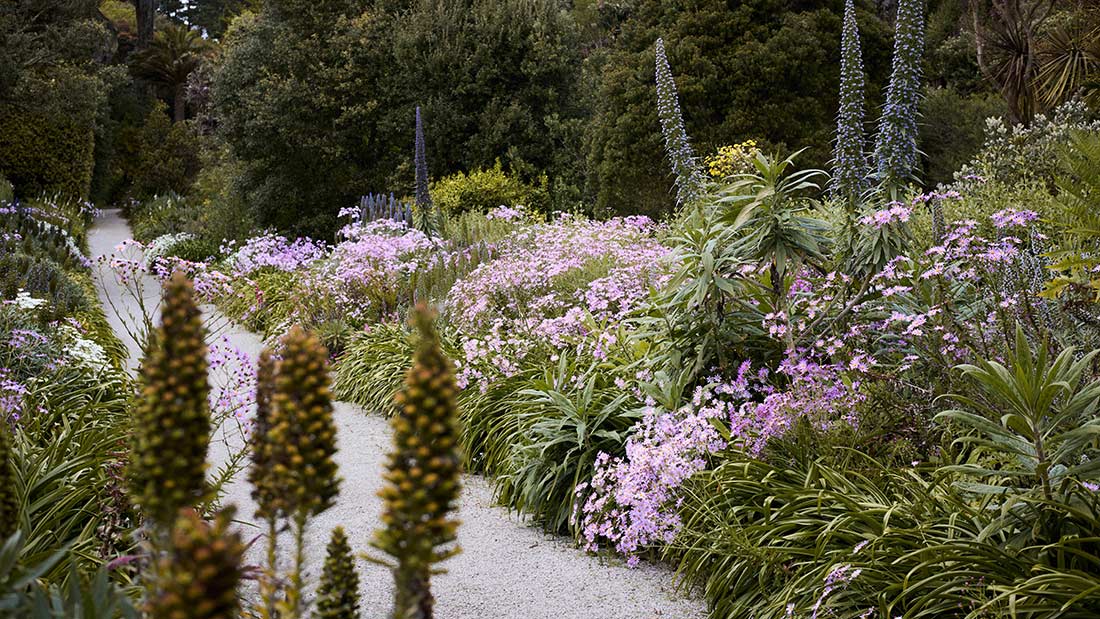
Plants at Tresco Abbey Gardens
Following Plants Across the World
Andrew’s route into gardening began much earlier, though, shaped by a childhood surrounded by plants and natural history. His parents were both biology and botany teachers near Penzance, and his mother in particular was a keen plantswoman. “I guess it rubbed off,” he laughs.
His earliest memories are not of formal gardens, but of collecting succulents and cacti, visiting small nurseries around Cornwall and experimenting with plants that seemed almost indestructible. The attraction was always towards the more unusual, tender species from warmer climates, the plants that suggested a world beyond Cornwall’s shores.
That curiosity has remained central to Andrew’s career. He continues to travel extensively, using his holidays to visit plants growing in their native environments, not to collect but to understand them and be inspired.
“One of my favourite things is to see the plants we’re growing, but growing in the wild,” he says.
A plant encountered on a mountainside in South Africa or among the islands of the Pacific can become the beginning of a new idea for Tresco, with Andrew using contacts at nurseries and gardens around the world to source seeds or propagation material responsibly. In many ways, it is a modern version of plant hunting, driven not by extraction, but by curiosity, conservation and collaboration.
The result is a collection that continues to expand. Tresco’s planting now reaches beyond the familiar Mediterranean regions into places such as New Caledonia, Lord Howe Island and islands around New Zealand, reflecting the garden’s ongoing search for plants that can thrive in its unique conditions.
“I try not to have a favourite plant range,” Andrew reflects, although the attraction towards tender plants is clear. For him, a favourite changes with every journey, every new discovery and every successful experiment. A trip to South Africa might inspire a renewed fascination with proteas and other South African species, while another year might bring a new interest in ferns or plants from a completely different ecosystem.
The diversity is what keeps the garden alive.
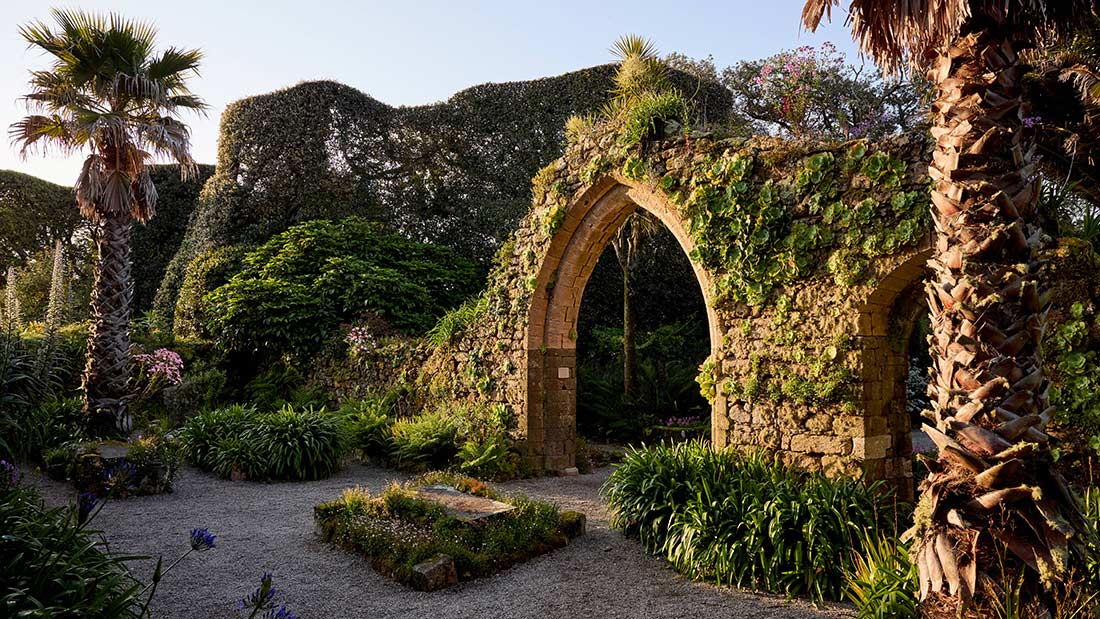
The arch from the wall of the mediaeval monastery
Growing the Garden, Growing Gardeners
With 17 acres to maintain and a team of eight gardeners, every day brings something different. The team manages everything from glasshouses and vegetable gardens to lawns, hedges and the extensive planting throughout the estate. Some tasks are highly specialised, while others are simply the timeless work of gardening: removing weeds, dividing plants, maintaining borders and making sure the landscape continues to feel abundant.
“There’s probably enough lawn here to keep us all busy mowing for maybe a day and a half,” Andrew jokes, but the scale of the garden is part of what makes it such a unique learning environment.
Tresco also plays an important role in encouraging the next generation of gardeners. Each year the garden takes on students who spend 12 months living and working on the island, learning the collection, developing practical skills and gaining experience that can carry them into future careers.
This year alone, 42 people applied for three positions.
Every week the students take part in plant identification sessions, walking through the garden and learning the botanical names, families and countries of origin of species growing around them. With thousands of plants to understand, the learning never really stops, even for experienced gardeners.
For Andrew, that continuing eagerness to learn is one of the most important qualities for anyone entering horticulture.
“I think for horticulture, and a lot of professions, the key is to constantly be curious,” he says. The future gardener needs to be adaptable, willing to learn and open to the idea that there is rarely only one correct way to do something.
That flexibility is becoming increasingly important as the climate changes. Tresco has always benefited from its mild conditions, but gardeners here are still watching shifting weather patterns carefully. More extremes, longer dry periods and unpredictable storms are forcing horticulturists everywhere to reconsider what they plant and how they maintain gardens.
At Tresco, that means thinking about water management, composting and reducing reliance on chemical controls. Around 80 per cent of the garden’s waste is composted and returned to the landscape, while the team is increasingly exploring biological controls and gentler approaches to pest management.
The future of gardening, Andrew believes, will require a different kind of thinking. Plant choices will need to respond to changing conditions, with gardeners considering drought tolerance, soil structure, mulching and how to create resilient planting schemes rather than simply following trends.
“The plant range that we’d normally look at might have to alter,” he says.
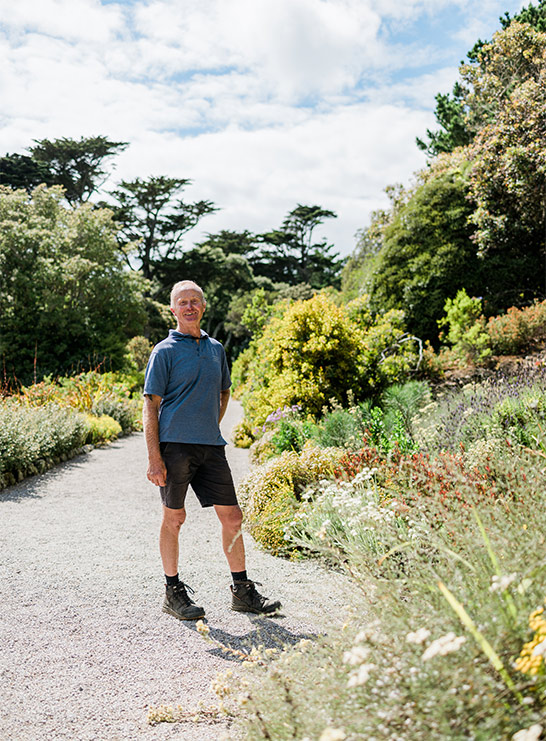
Andrew Lawson – Head Gardener at Tresco.
A Living Collection for the Future
For a garden like Tresco, the future of horticulture is collaborative.
Although Tresco is not officially a botanic garden, it functions as a living collection, protecting and propagating plants that may have a better chance of survival here than elsewhere in Britain. Some species grown at Tresco are rare in the wild, and by sharing seeds and cuttings with other gardens, Andrew believes collections like this can help safeguard plants for the future.
“If we lose it, we’ve got somewhere to go to just say, can we have a cutting back?” he explains.
That sense of collaboration runs through modern horticulture, where gardens are no longer isolated collections but connected networks of knowledge, plants and people.
After more than 40 years among these paths, Andrew still talks about gardening with the enthusiasm of someone discovering it for the first time. Perhaps that is what makes Tresco so compelling: it is not a finished picture, but a garden in conversation with the wider world, shaped by weather, geography and the endless curiosity of the people who tend it.
Every new seed, every cutting and every young gardener who passes through the island offers new knowledge and fascination, to allow the plant collections and the people who care for them to continue to flourish.
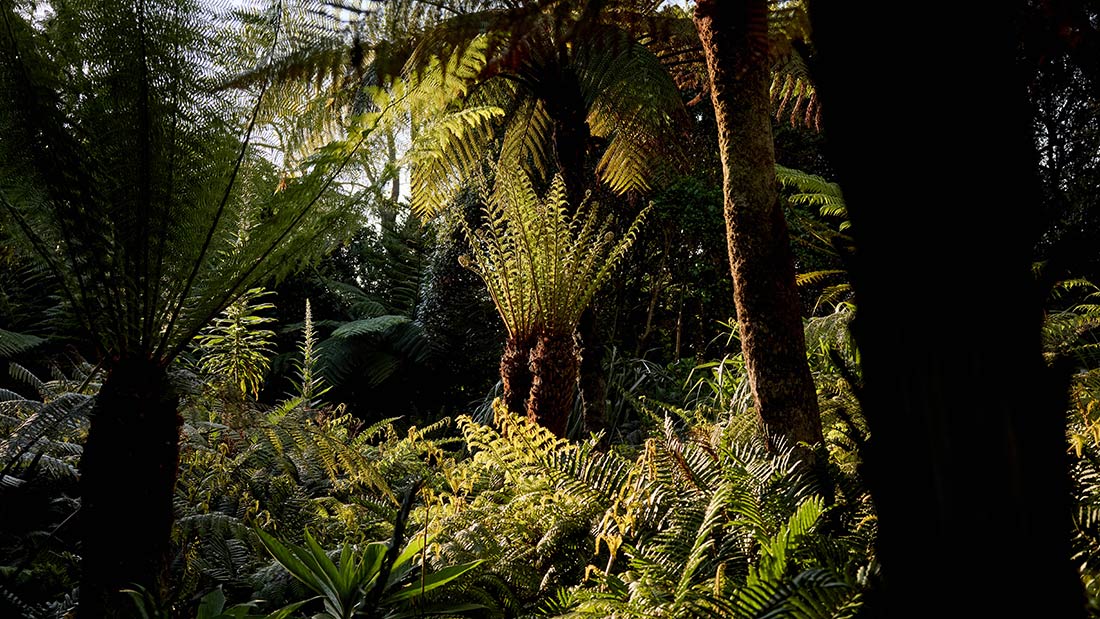
Tresco Abbey Gareden – A sub-tropical paradise