Spring in Biomes and Tropics: Cornwall and Singapore
Spring Worldwide pairs the Great Gardens of Cornwall with notable gardens across the globe, exploring how the season unfolds across climates, landscapes, and ecosystems. Each story highlights spring as both a season and a lens for understanding growth and renewal.
In this pairing, a former clay pit transformed into a global ecological site meets one of the world’s leading tropical gardens.
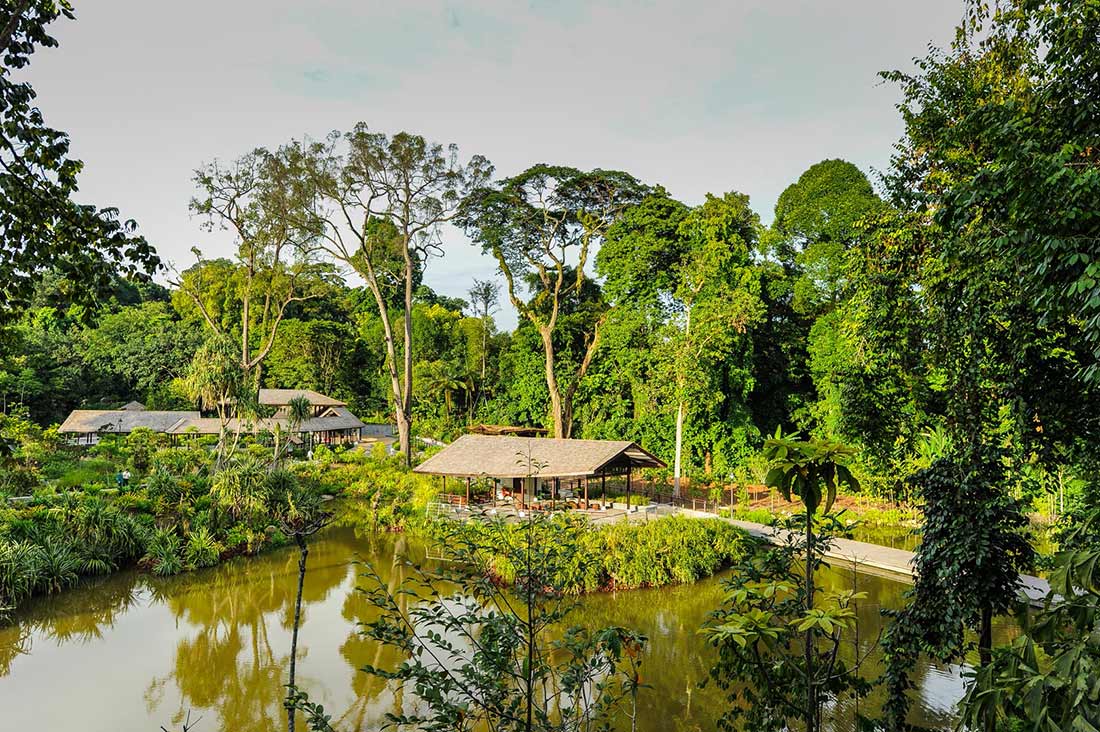
An elevated boardwalk winds through the lush tropical canopy of the Learning Forest at Singapore Botanic Gardens. 📸 Ben AW.
Two Gardens, Two Different Ideas of Spring
At the Eden Project, spring is a concept as much as a season. Within biomes that recreate global climates, growth is orchestrated: rainforests breathe, Mediterranean landscapes bloom, and plants from different continents coexist. Here, spring is created and interpreted rather than arriving naturally.
Protected from the extreme shifts in British weather, plants under Eden’s geodesic domes respond to an environment where temperature and humidity are finely tuned. Triple-layered cushions capture sunlight, while the south-facing granite wall of the former clay pit traps residual solar heat. This natural warmth is bolstered by pioneering green technology, including a deep geothermal well that pumps subterranean heat directly to the biomes, nurseries, and facilities.
At Singapore Botanic Gardens, spring is constant. Situated just north of the equator, temperature, humidity, and light remain relatively stable year-round. Growth is continuous, cycles overlap, and flowering is independent of a single seasonal shift.
In this equatorial climate, nature rarely takes a breath. Flowering occurs in an unbroken sequence, turning spring from a fleeting date on a calendar into an ongoing, living energy that defines how the landscape is experienced every single day. The constant overlap of budding, blooming, and regeneration offers visitors a sense of perpetual vitality.
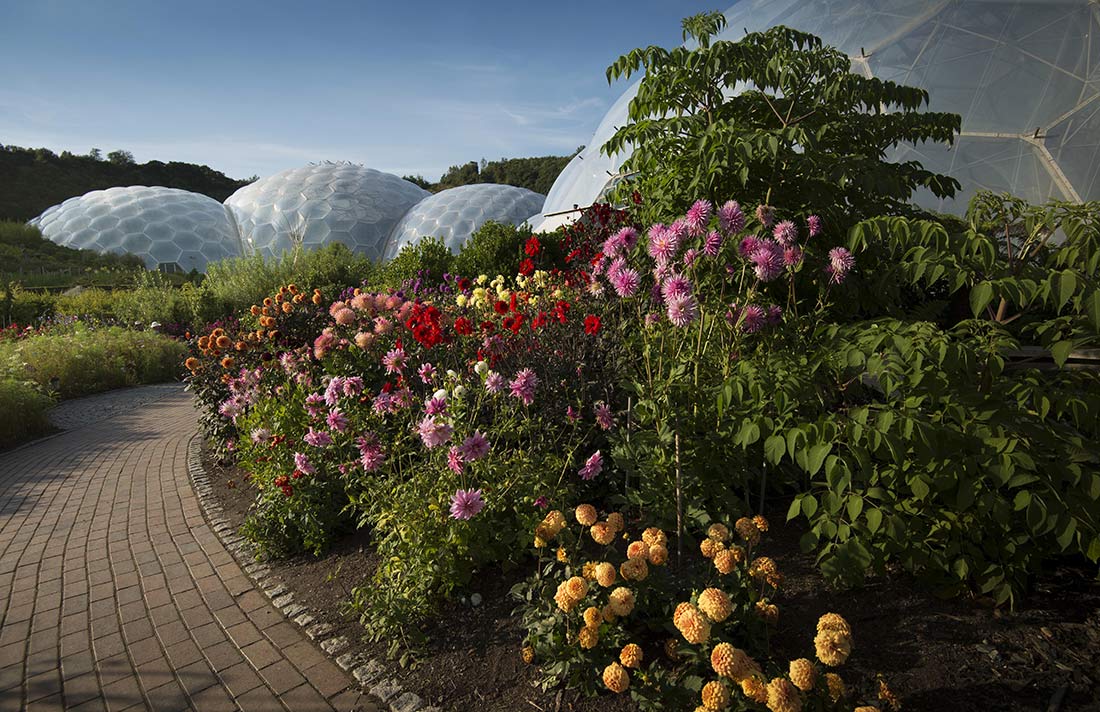
Colourful outdoor planting creates a vibrant approach to the Eden Project’s iconic biomes.
📸 Emily Whitfield-Wicks. © Apex News & Pictures.
Curated Worlds, Living Systems
At Eden, landscapes are designed to tell global stories. The Rainforest Biome evokes equatorial jungles; the Mediterranean Biome offers warmth and light. Visitors move between them as if travelling across continents.
These biomes function as controlled global micro-environments, offering an immersive portal to distant habitats. By grouping diverse plant species within these giant structures, Eden allows guests to journey around the world in a single afternoon. The underlying purpose goes beyond spectacle; it serves to remind visitors of humanity’s deep reliance on the plant kingdom, using immersive landscapes to inspire hope, understanding, and positive environmental action.
At Singapore Botanic Gardens, the landscape is lived rather than constructed. A UNESCO World Heritage Site, it combines ornamental beauty with scientific purpose. Collections such as the National Orchid Garden thrive within their natural climate.
The garden acts as an active, outdoor laboratory where every towering tree, tropical shrub, and delicate flower serves a dual role: captivating the eye while advancing botanical research. It is an environment where beauty is inextricably linked to scientific discovery.
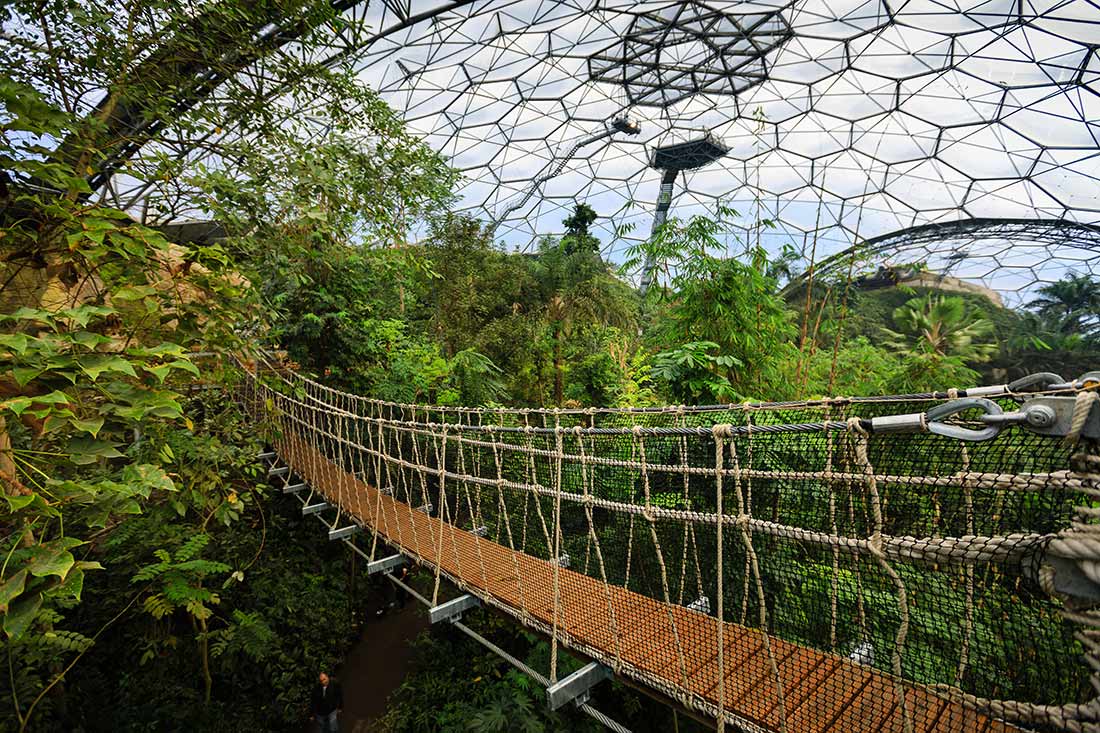
A treetop walkway offers an elevated journey through the lush green canopy of the Rainforest Biome.
📸 Steve Tanner.
Flowering and Seasonal Expression
In Cornwall, spring is often marked by a surge of bloom. At Eden, this is reflected both inside and outside the biomes. Seasonal displays outside the domes echo British spring rhythms, while inside, flowering follows the logic of each climate zone. Some species respond to rainfall, others to temperature, and some independently of the calendar.
In Singapore, flowering is continuous. Orchids are a focal point, their intricate, delicate blooms appearing year-round. Rather than waiting for a single explosive seasonal window, the National Orchid Garden reveals ever-shifting tapestries of color, form, and scent month after month. This steady, perpetual rhythm encourages a different kind of visitor experience, one focused on slow observation and patience, knowing that at any given moment, something new is unfurling while something else gently completes its cycle.
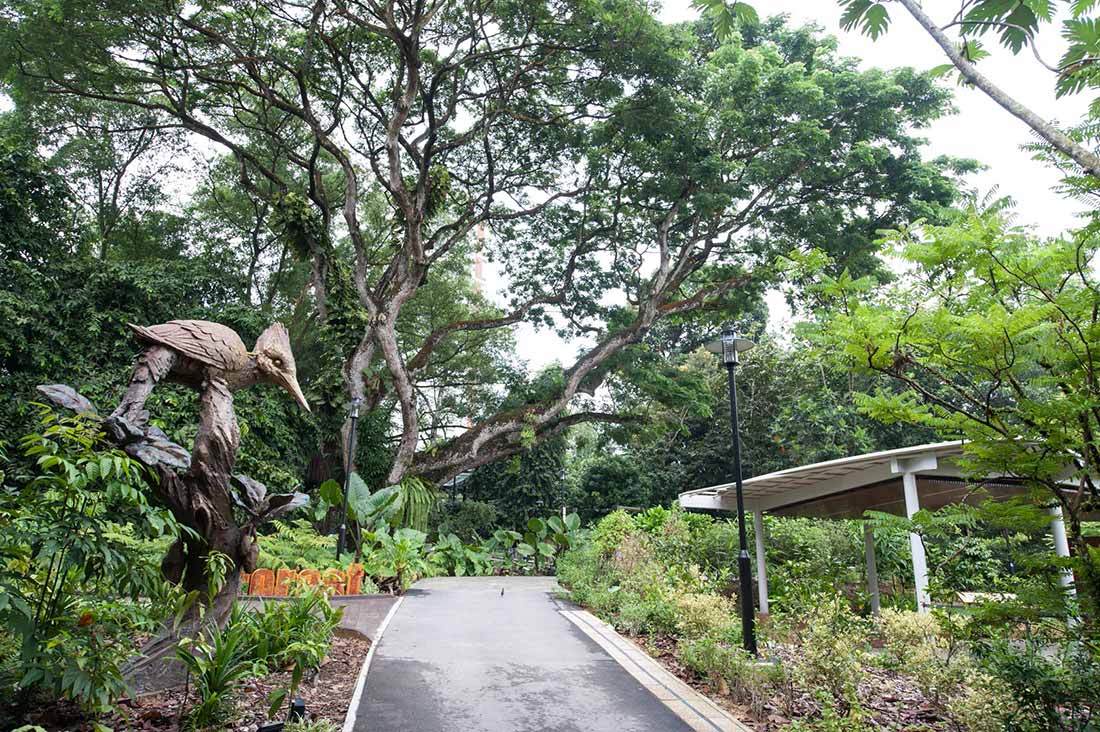
Pathway leading through the leafy woodland setting of the Jacob Ballas Children’s Garden, in the Singapore Botanic Gardens.
Education, Exploration, and Climate
Both gardens extend beyond beauty into mission-driven horticulture. The Eden Project was conceived for environmental education, linking plants, people, and the planet. Its Biomes allow visitors to understand ecosystems otherwise inaccessible.
Operating as an educational charity, the Eden Project has welcomed tens of millions of visitors over its twenty-five-year history, spreading its ecological message far beyond Cornwall through nationwide and international endeavours. The site was built to demonstrate that human life is woven into nature rather than separate from it. Spring inside the biomes becomes an educational moment, a living demonstration of how life adapts, regenerates, and flourishes across radically different climate zones.
Singapore Botanic Gardens shares this through research, conservation, and public engagement. From orchid hybridisation to tropical plant science, it plays a global role while remaining accessible to visitors.
The estate serves as an international hub for tropical horticulture, leading critical work in rainforest conservation and orchid breeding. Walking through its grounds, visitors witness active environmental stewardship in real time, where every cultivated bed and wild canopy contributes directly to global plant preservation.
Climate shapes each garden differently. Eden’s climate is engineered, the temperature and humidity are controlled to recreate distant environments. In Singapore, the climate is constant, with the garden working alongside natural rainfall, daylight cycles, and subtle variations.
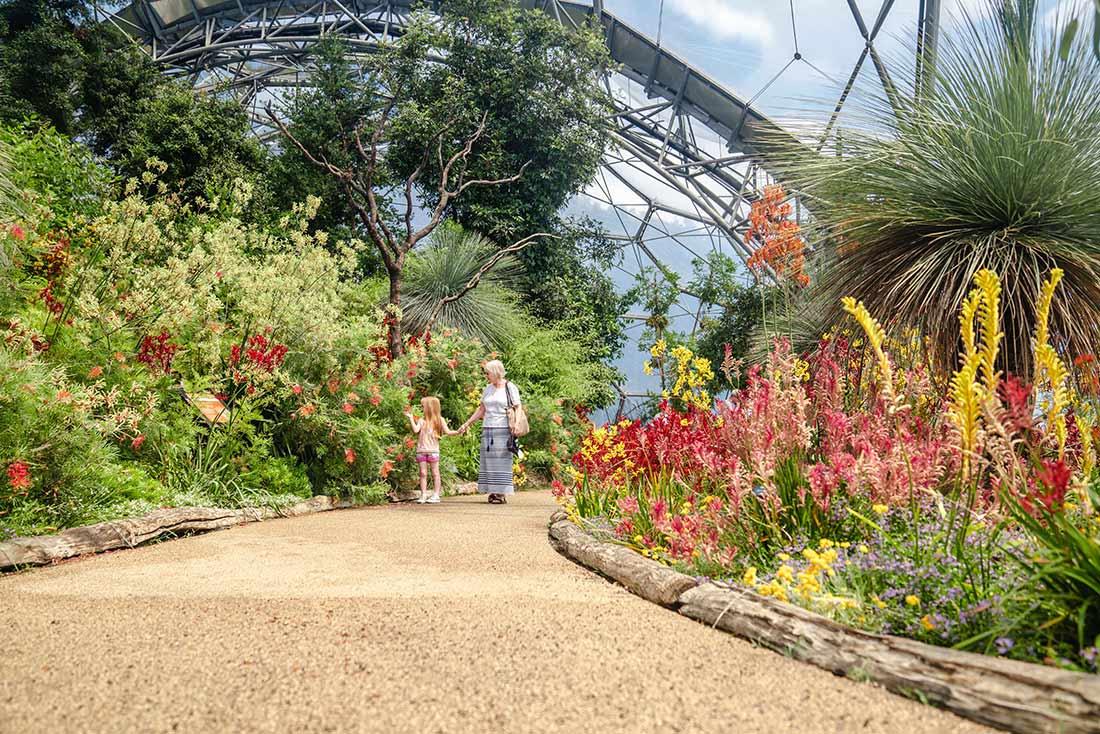
In the Mediterranean Biome, visitors can easily wander through blooming landscapes.
A Shared Season
This pairing challenges the traditional idea of spring. At Eden, it is a lens for exploring global renewal. At Singapore Botanic Gardens, it is continuous, a reminder that not all landscapes follow northern hemisphere seasonal rhythms.
From Cornwall’s biomes to Singapore’s equatorial gardens, spring manifests in multiple forms but in every case, it marks renewal, growth, and the ongoing cycle of life.
We hope you enjoyed this instalment of the Spring Worldwide series. Keep an eye on the Great Gardens of Cornwall blog and social channels for more stories exploring spring in gardens around the world.