Woodland Light and Seasonal Structure: Spring in Cornwall and Belgium
Spring Worldwide pairs the Great Gardens of Cornwall with remarkable gardens across the globe, exploring how the same season unfolds across different climates, landscapes and cultures. Each pairing becomes an exchange, revealing spring as something both shared and distinct.
In this pairing, an historic Cornish woodland meets a Belgian arboretum.
Antony Woodland Garden, near Saltash in Cornwall, occupies around 100 acres of gently sloping woodland, established in the early 20th century and developed through careful planting of magnolias, camellias, rhododendrons, and exotic species suited to Cornwall’s mild climate. Known for its layered woodland structure and extended spring display, the garden combines intimacy with subtle compositional clarity.
Provinciaal Domein Het Leen, located in Eeklo, Belgium, spans over 300 hectares and has been shaped over decades of forestry management. Nestled within the wider estate is a 6-hectare arboretum carefully planted with northern European and Asian tree species. It is celebrated for its diverse collection, clear structural planting, and educational role in showcasing temperate trees in both scientific and aesthetic contexts.
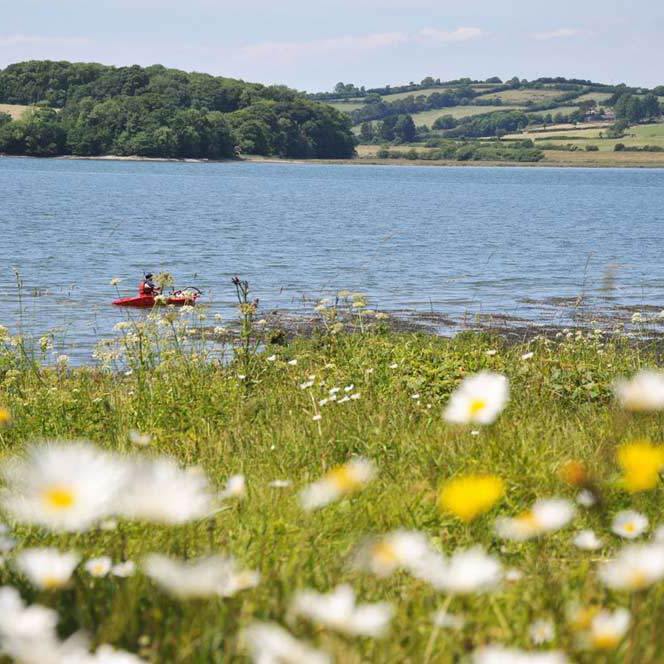
Set beside the water, Antony Woodland Garden benefits from a mild, coastal climate. [Photo credit: Clare Dearden]
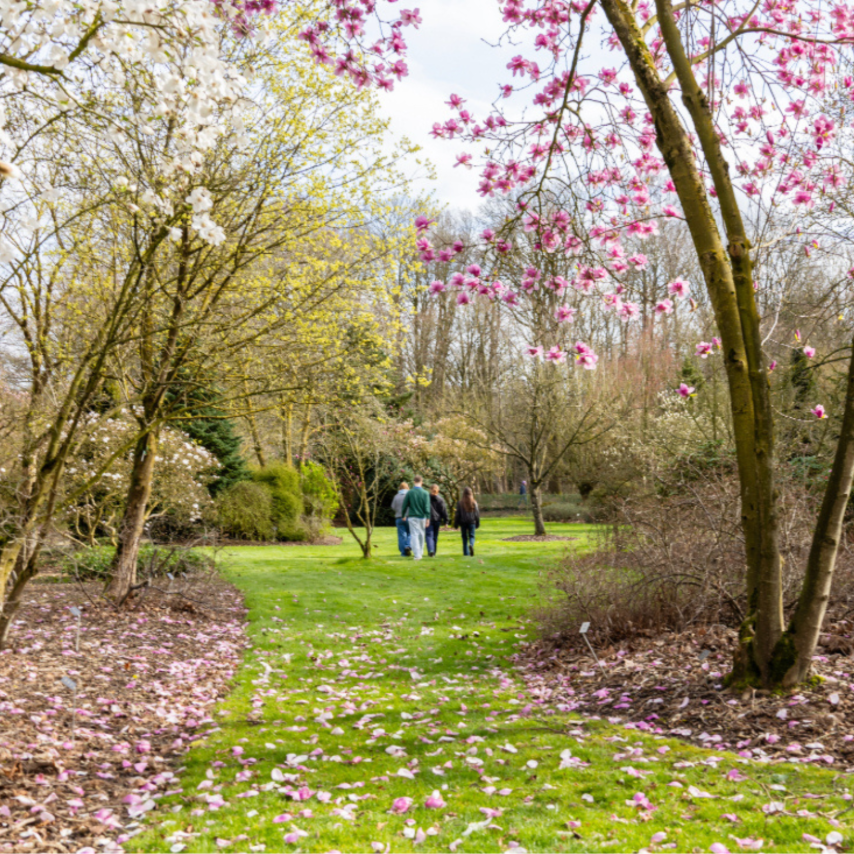
Blossom punctuates structure at Arboretum Provinciaal Domein Het Leen
Light, Ground, and Canopy
In Cornwall, spring begins subtly on the woodland floor. Early flowers, camellias, and magnolias emerge beneath deciduous trees, revealing the season first in low layers before leaves fill the canopy. The mild climate allows a gradual progression: each plant has its moment, and together they form a layered sequence of texture and colour.
“Spring starts early here. Carpets of snowdrops, perfect crocus, and the smallest of violets make way for our large collection of Camellia and magnolias,” explains Alison Taylor, Head Gardener at Antony Woodland Garden. “As the season goes on, the rhododendrons take centre-stage and as the canopy of old and new trees starts to fill, the dappled spring light filters through to the woodland floor just as the bluebells come to their full glory.”
In Belgium, spring is expressed across form and structure. Long avenues of trees and the careful spacing of specimens allow light and leaves to return in a measured sequence, highlighting both canopy and understory. Here, blossoms and emerging foliage function as points of detail within a wider composition, revealing the rhythm of the season in a more architectural way.
“At Arboretum Provinciaal Domein Het Leen, spring is easiest to read in the structure. The spacing of the trees, the gradual return of leaf, and the way light moves through the planting as the canopy develops,” says Zeger Andries, Estate Manager at Domein Het Leen. “The design makes seasonal change very clear: as buds open and leaves expand, you can see exactly how canopy and understory respond to one another.”
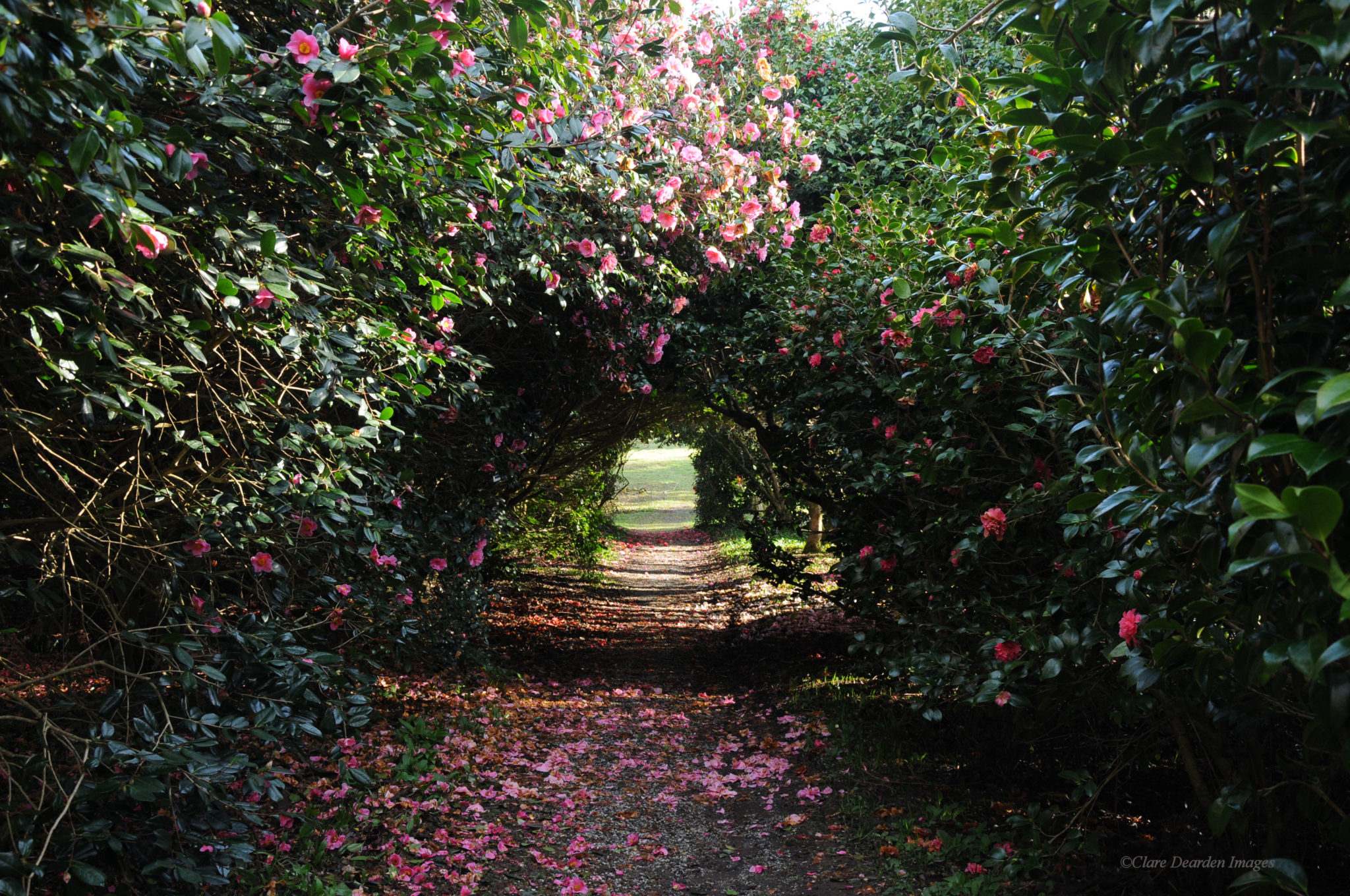
Carefully laid out pathways reveal spring gradually at Antony Woodland Garden. [Photo credit: Clare Dearden]
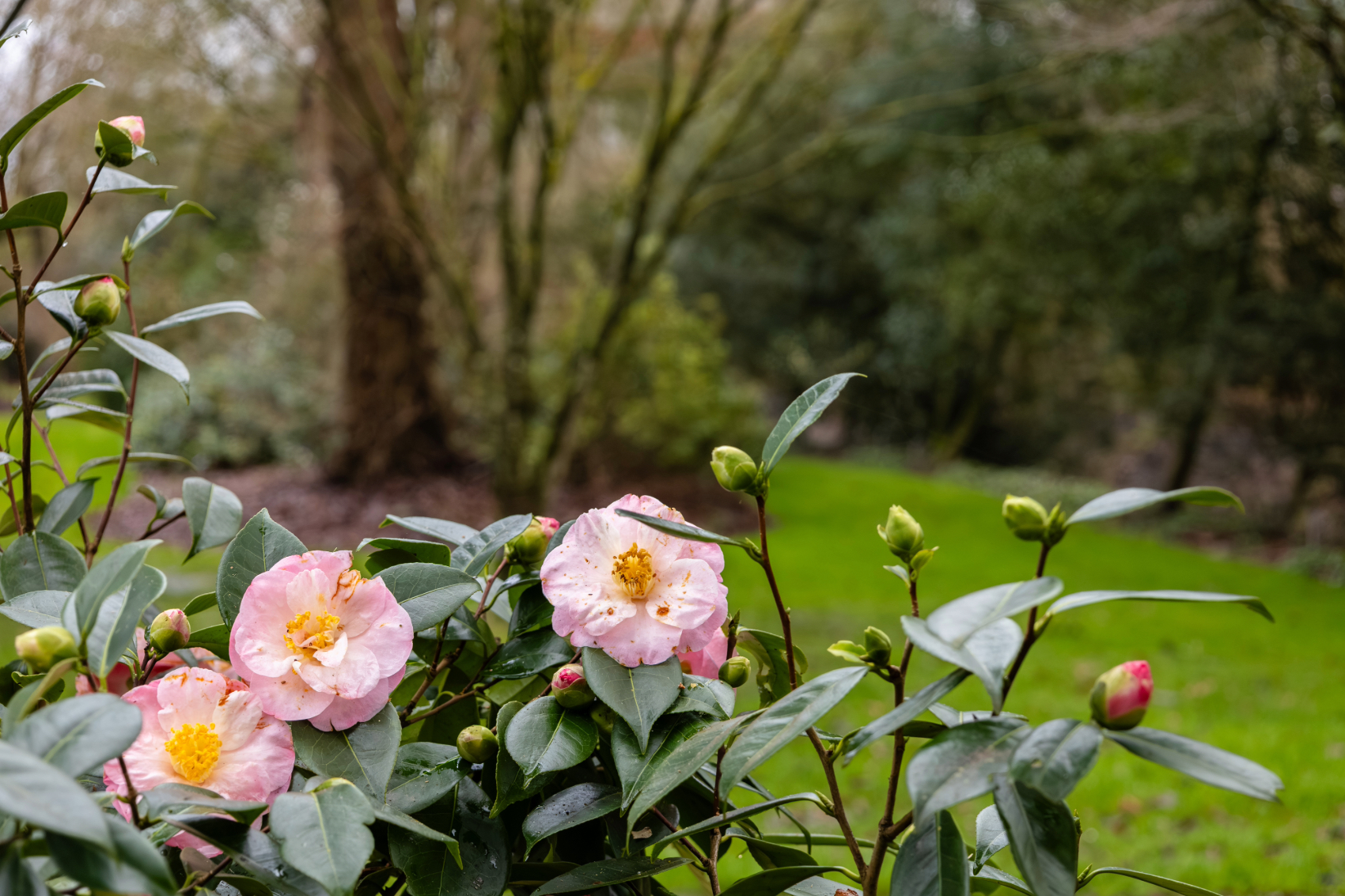
Spring flowering highlights the collection at Arboretum Provinciaal Domein Het Leen
Movement and Experience
Both gardens invite walking as a way of experiencing spring, but the sensation of movement differs according to topography, planting, and scale. Paths at Antony Woodland wind and dip through intimate woodland compartments, opening onto glimpses of trees, flowers, and moss-covered ground. Observation is cumulative: small details and sequences reveal the unfolding of spring over time.
“Walking through Antony Woodland Garden in spring is a gradual process; the winding paths and changes in level mean you encounter the planting in stages rather than all at once,” says Taylor. “The layout encourages close looking. Small shifts in planting, light, and other factors become noticeable as you move through the garden.”
At Arboretum Provinciaal Domein Het Leen, progression is measured and reflective, offering moments to observe the form, growth, and structure of individual trees while appreciating patterns across the collection. Movement and observation are intertwined, encouraging a sustained engagement with seasonal change.
“The avenues at Arboretum Provinciaal Domein Het Leen set a steady rhythm for walking, giving you time to compare individual trees while also understanding the wider structure of the collection,” explains Andries. “Because the paths are so clearly defined, movement through the arboretum becomes a way of observing growth patterns and seasonal change across a large scale.”

Early spring emerges at Antony Woodland Garden with ground-level flowering
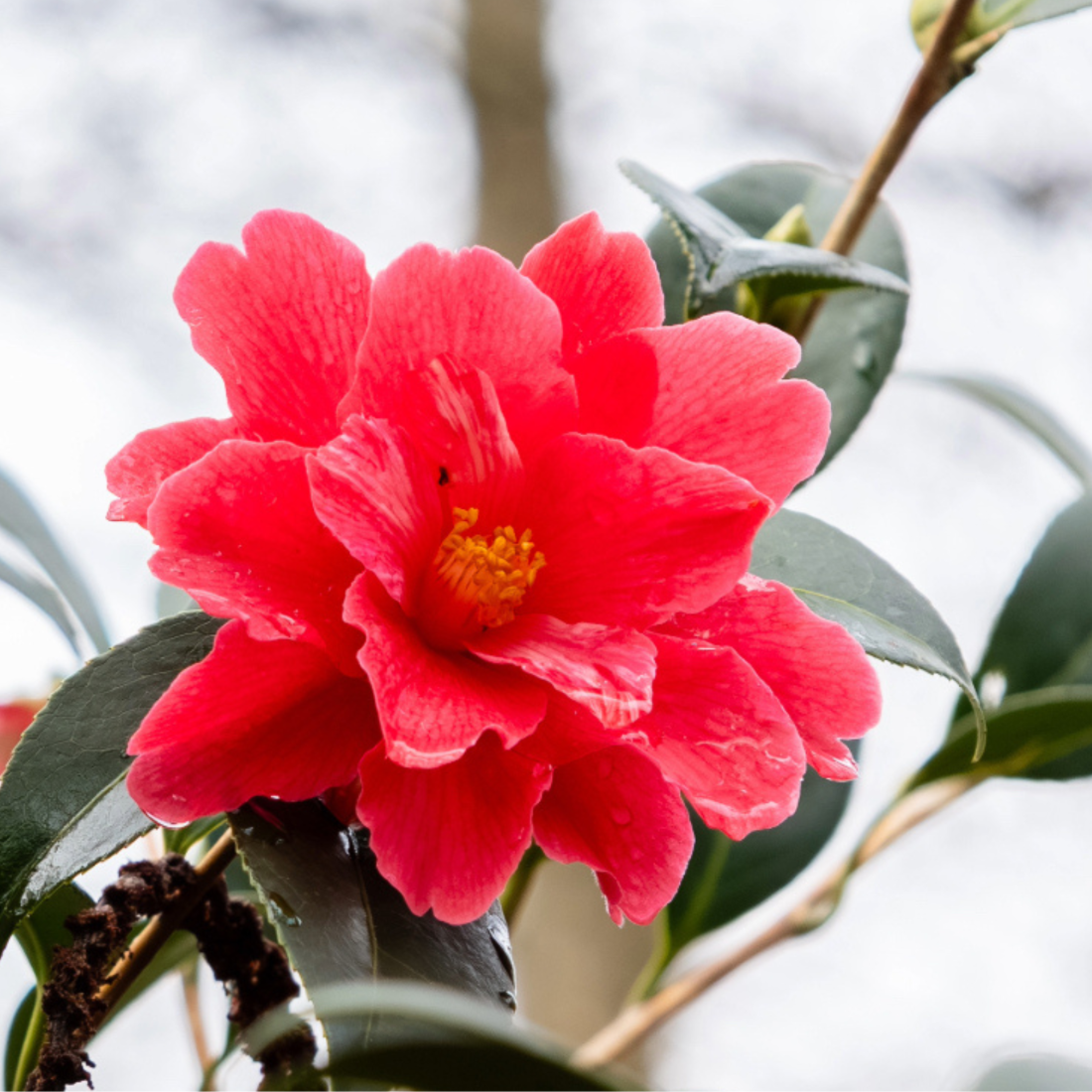
Flowering trees bring seasonal colour to Arboretum Provinciaal Domein Het Leen
Collections, Character, and Philosophy
Each garden is shaped by carefully curated collections, though their approach differs in scale and intent. Antony Woodland emphasizes atmosphere and layered planting, drawing on Cornwall’s horticultural legacy to combine exotic and native species for sequential flowering and visual interest. Arboretum Provinciaal Domein Het Leen emphasizes clarity, grouping trees to highlight taxonomic, geographic, and ecological relationships, and providing opportunities for both education and aesthetic appreciation.
What emerges is a shared philosophy: spring is a season to observe, reflect, and engage with the life of the garden. Whether through low-level colour and flowering in Cornwall, or structural growth and canopy emergence in Belgium, both gardens reveal the interplay of light, planting, and design that defines seasonal experience.
“The collection is organised to show relationships between species, whether geographic or botanical, so visitors can see both diversity and pattern within the planting,” says Andries. “Arboretum Provinciaal Domein Het Leen combines display with explanation; the way trees are grouped makes it possible to read the collection as both a landscape and a study of temperate species.”
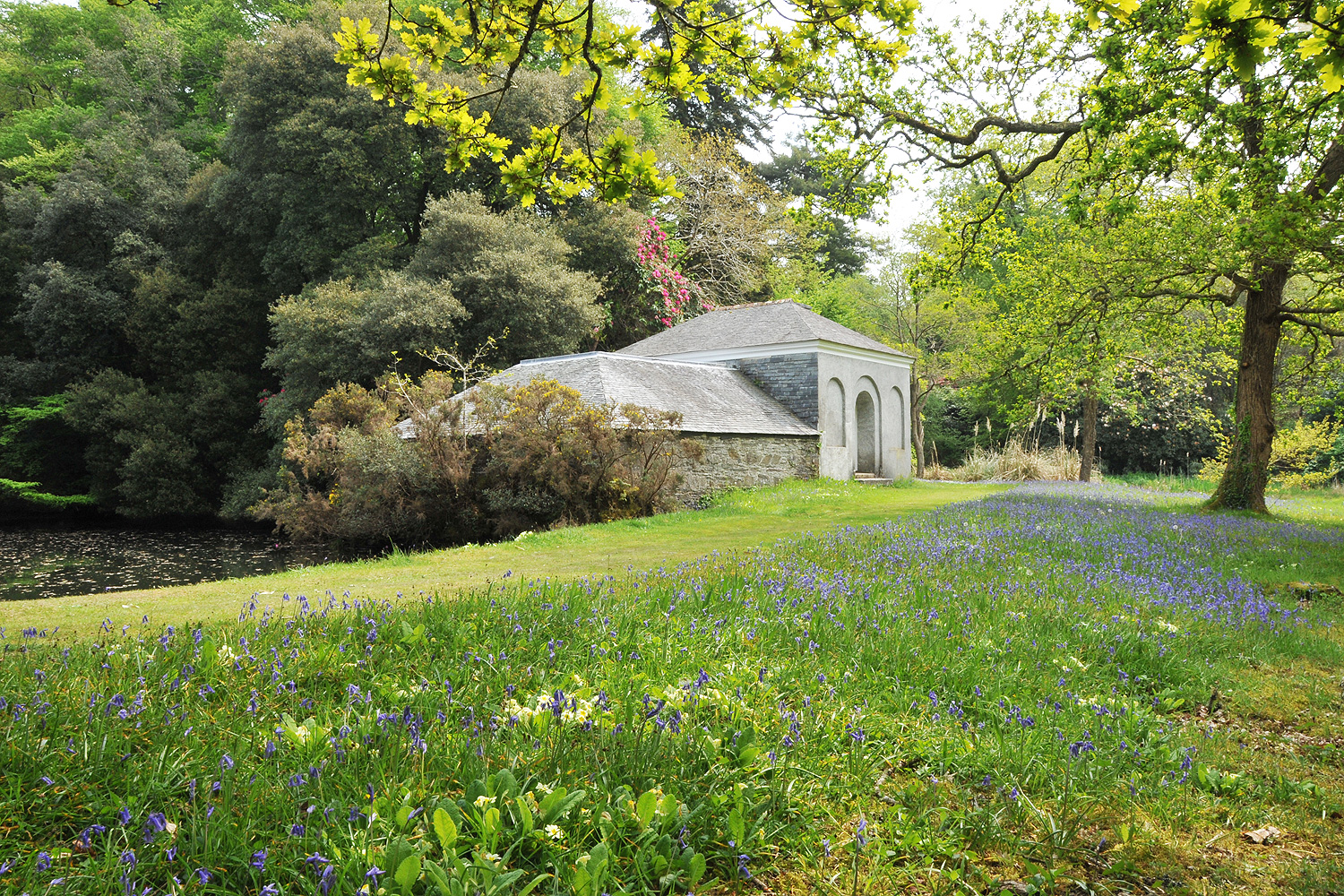
Bluebells emerge in dappled light at Antony Woodland Garden

Tiny flowering details can be found across Arboretum Provinciaal Domein Het Leen
A Shared Season
Spring Worldwide is a series of fourteen explorations linking Cornwall’s gardens with landscapes around the world. Each pairing offers a different perspective on the same season, shaped by climate, planting, and design philosophy.
In Cornwall, spring emerges in intimate woodland sequences, revealing its rhythms close to the ground. In Belgium, it is revealed in structured sequences, highlighting canopy, form, and the architecture of the landscape.
Together, these gardens show that while spring may unfold differently, it is always a season of renewal, growth, and careful observation.
We hope you enjoyed this instalment of our Spring Worldwide series. Keep an eye on the Great Gardens of Cornwall blog and social channels, there are plenty more fascinating stories coming your way very soon.