Bluebells and Ipê Trees: Spring in Cornwall and Brazil
Spring Worldwide pairs the Great Gardens of Cornwall with remarkable gardens across the globe, exploring how the same season unfolds across different climates, landscapes and cultures. Each pairing becomes an exchange, revealing spring as something both shared and distinct.
In this first pairing, a Cornish sculpture garden meets one of Brazil’s most ambitious landscape and cultural projects.
Tremenheere Sculpture Gardens, near Penzance in Cornwall, is a unique and widely celebrated botanical sculpture garden, established in the early 2000s by Neil Armstrong and developed across a sheltered hillside overlooking Mount’s Bay. Covering around 22 acres, it brings together subtropical planting and contemporary sculpture within a series of designed landscapes.
Inhotim Institute, located in Brumadinho in Minas Gerais, Brazil, is one of the world’s largest open-air museums and botanical gardens, founded in 2006 and now spanning over 140 hectares accessible to visitors (within a much larger estate). Combining art, architecture and one of the most significant plant collections in Latin America.
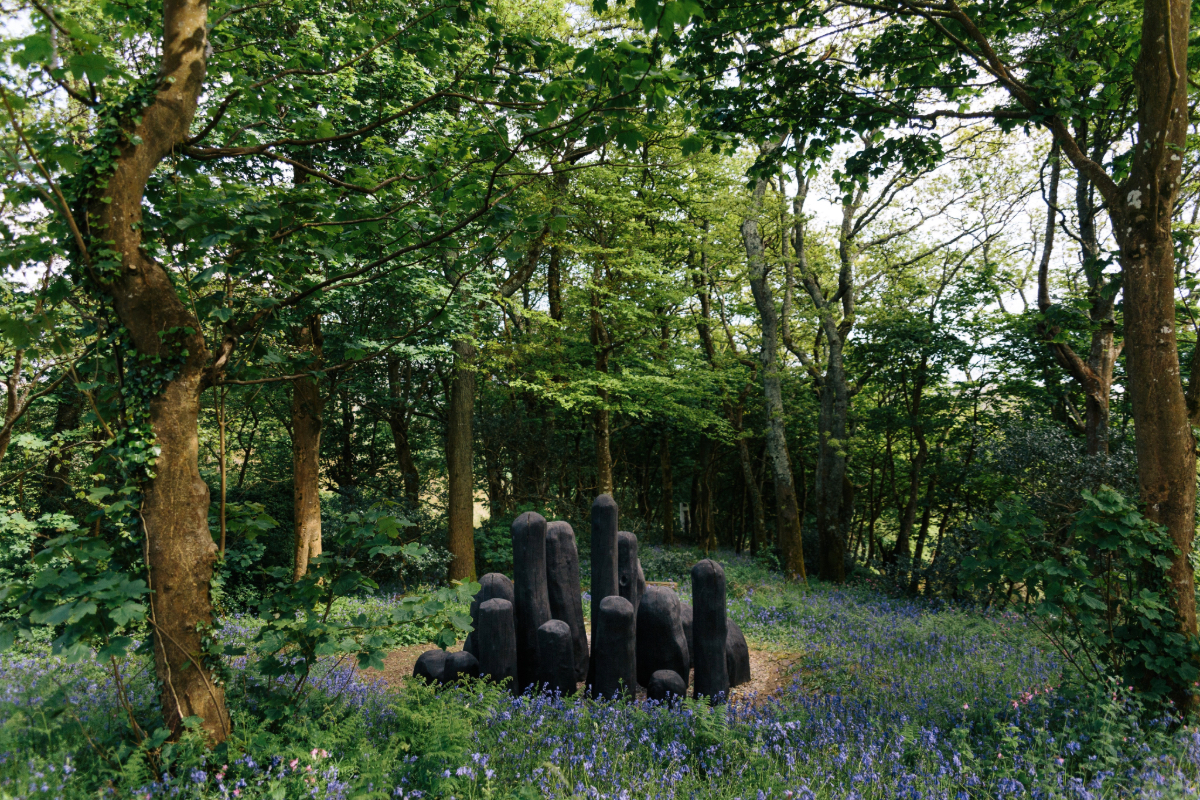
Black Mound by David Nash RA at Tremenheere Sculpture Gardens
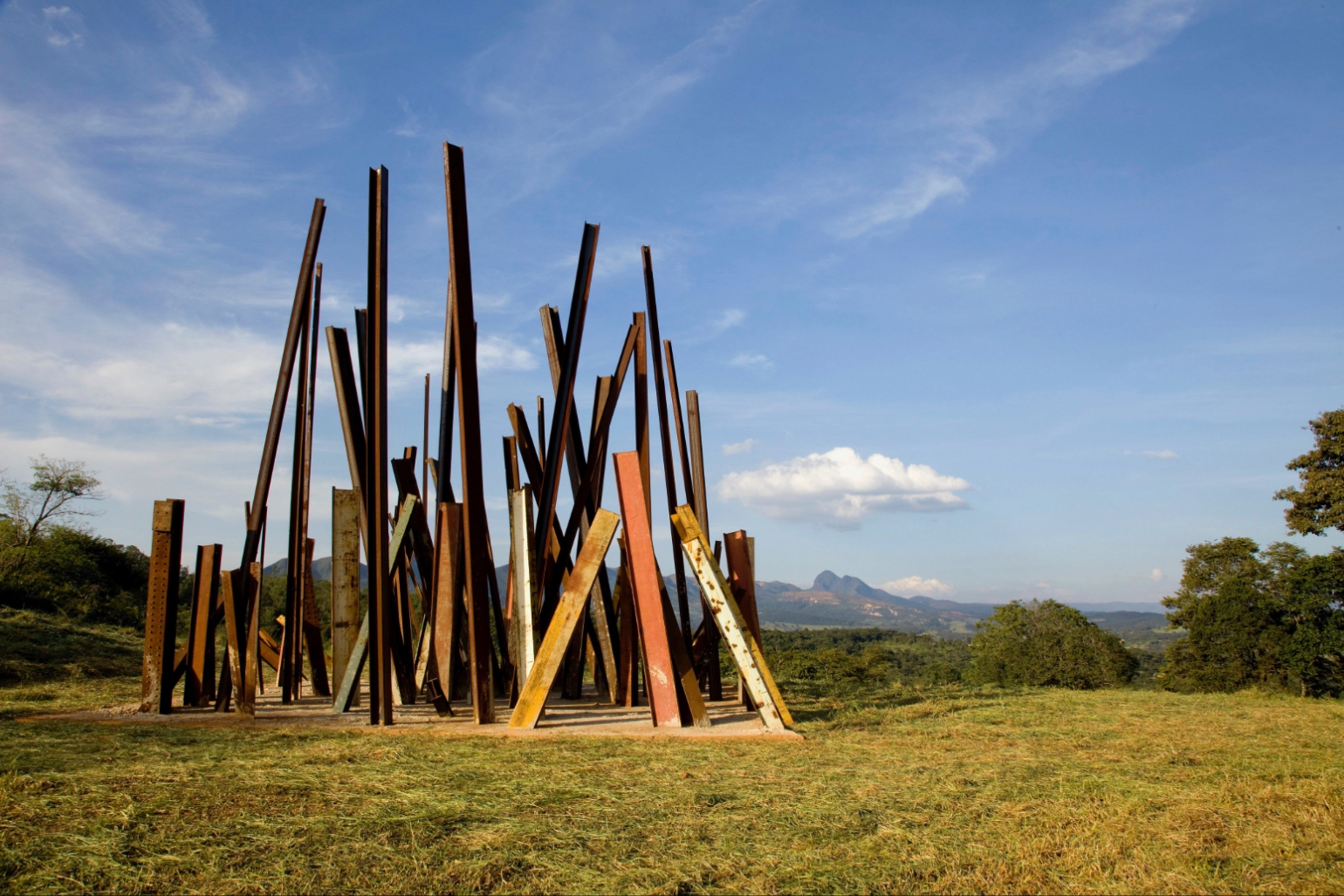
Beam drop Inhotim by Chris Burden at Inhotim Institute
Light and Rain: Two Beginnings of Spring
At Tremenheere, spring begins with light. Before the canopy closes, sunlight moves freely through the garden, illuminating the woodland floor and open meadows. It is a brief but defining moment in the season, when the structure of winter remains but the energy of spring is already present. As founder Neil Armstrong describes, “Spring is exciting for us. With the deciduous trees still bare, there’s a lot of light in the garden, early bulbs cover the woodland floor, and bluebells follow soon after – a flush of colour low down that really hints at the change of the season.”
This early phase reveals the diversity of the garden. “Our garden isn’t typical of this area,” explains Armstrong. “It has a more subtropical emphasis, with around 3,000 plant species across seven different habitats. In spring, that diversity really shows itself, from woodland bulbs to Himalayan magnolias, rhododendrons and camellias flowering in a short, intense burst.”
“Spring brings a concentrated season of flowers here, and many of our plants have to try a little harder at this time of year to attract insects for pollination,” Armstrong continues. “That means a lot of highly scented blooms, which adds another layer of interest to the garden.”
Across the Atlantic, at the Inhotim Institute in Brazil, spring arrives differently. After months of dry heat, the season begins with rain. Storms break, the air shifts, and the landscape responds almost immediately with rapid, visible growth.
As Matheus Nogueria, Landscape and Grounds Manager at Inhotim, explains, “Spring for us has two meanings: in human terms it feels like renewal, new energy and new cycles; ecologically, it marks the beginning of the rainy season after a long dry period, when we see a real burst of life in the landscape,” adding that “Spring brings a noticeable shift in the atmosphere of the gardens. With the return of the rainy season after the dry winter months, the landscape becomes greener, more dynamic and sensorially rich.”
“Unlike in the northern hemisphere, we don’t have a dramatic change in daylight, so for us spring is defined much more by the return of the rains. Around September, when the rain starts, that’s the true beginning of spring and of a new cycle of life,” he notes, emphasising that “In tropical landscapes like Inhotim, seasonal change is less about temperature and more about cycles of rain, flowering and ecological life.”
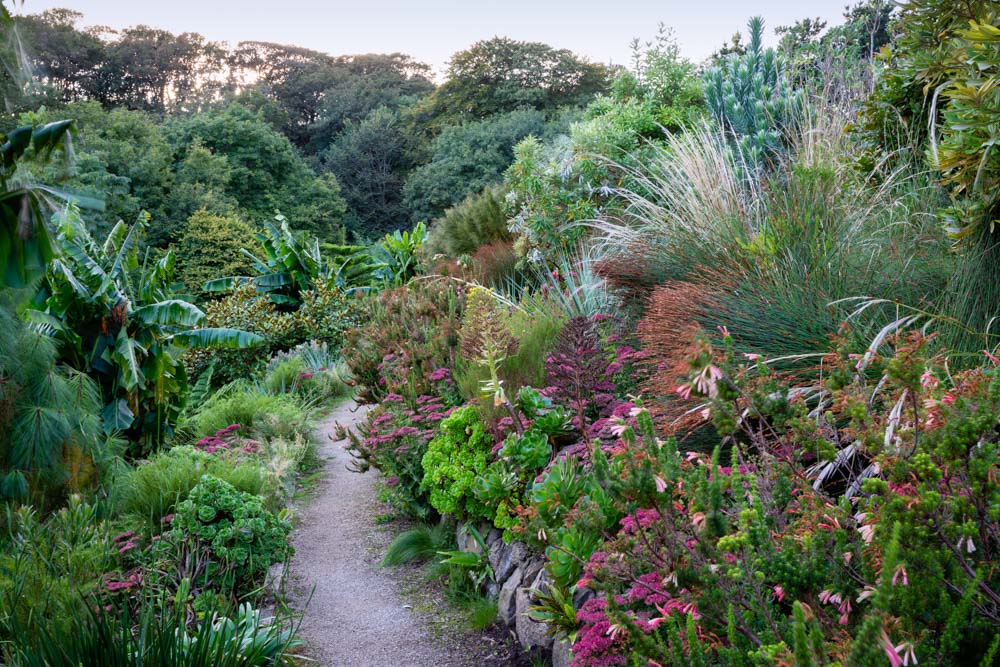
Tremenheere is home to a wide variety of carefully collected and curated subtropical plant species
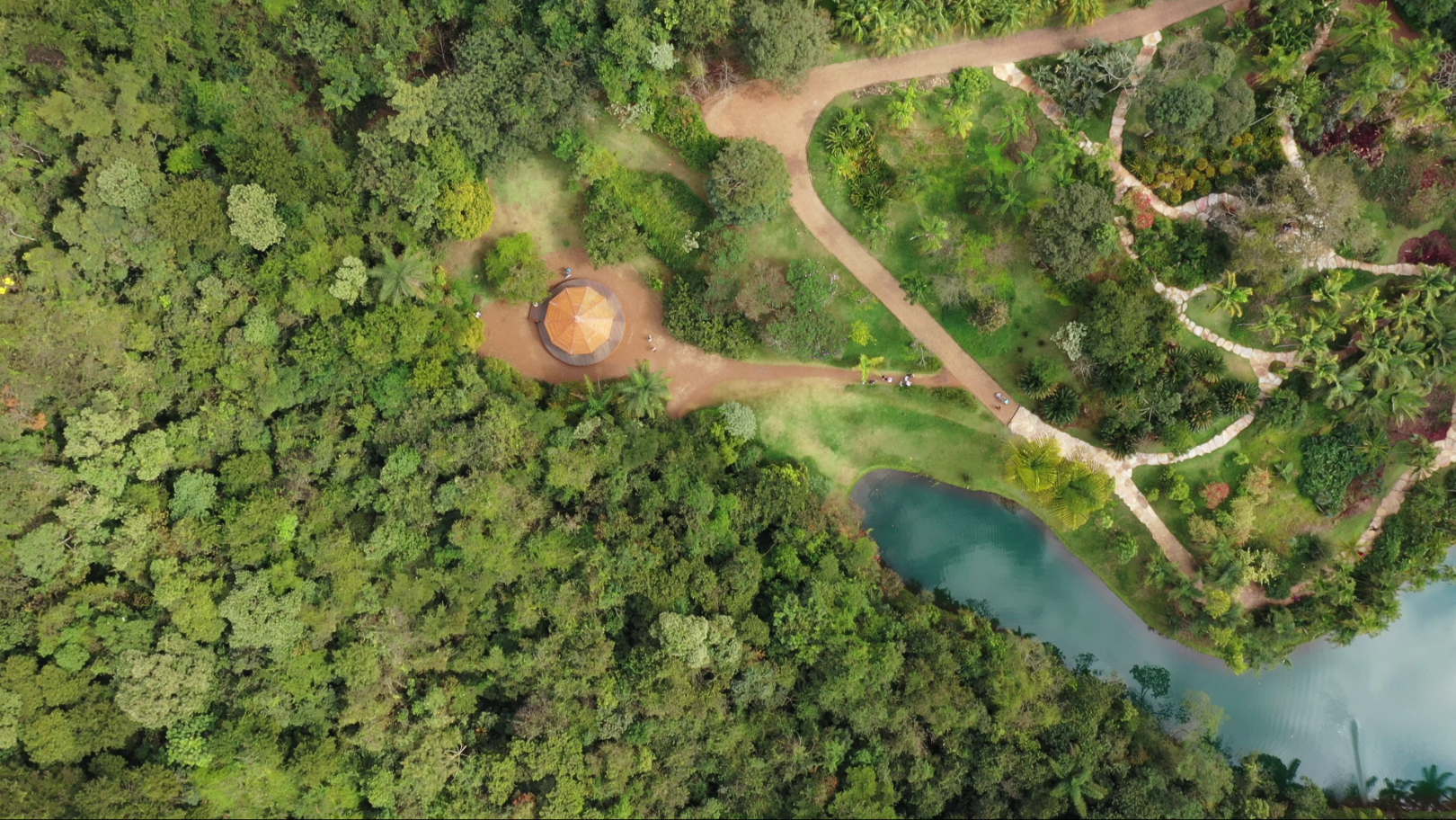
Inhotim sits at the meeting point of two of Brazil’s most ecologically significant biomes
Ground and Canopy
In Cornwall, spring unfolds close to the ground, as bluebells and early woodland flowers form carpets beneath the trees. At Tremenheere, this is set against deciduous and evergreen structure and subtropical planting, creating a layered and carefully composed landscape.
In Brazil, the season rises into the canopy as treetops burst into a shifting spectrum of colour, this progression marks the passage of time as much as the arrival of the season itself.
“Spring in Brazil runs from late September to late December and it’s a very vibrant, transitional season,” says Sabrina Carmo, Nature Manager at Inhotim. “Warmer temperatures return, the rains come back, and at Inhotim we feel this especially strongly because we sit between two important biomes, the Atlantic Forest and the Cerrado.”
Carmo reflects, “For me, spring is announced by the Ipê trees (Bignoniaceae). They bloom in sequence – first purple, then yellow, then white, and finally pink – and this progression of colour really marks the passage of time and once the last tree in the sequence has bloomed, that marks the arrival of spring in our region.”
Spring at Inhotim is also a time of preparation and continuity, as the nursery begins producing plants for the year ahead, supporting both landscape management and wider environmental projects, a period which also sees, as Nogueira notes, “a wide range of herbaceous species, particularly from the daisy family, begin to flower more intensely, bringing subtle but extensive layers of color across open areas of the gardens.”
Adding that, “bees, butterflies and hummingbirds become especially active, responding to the abundance of flowering species.”
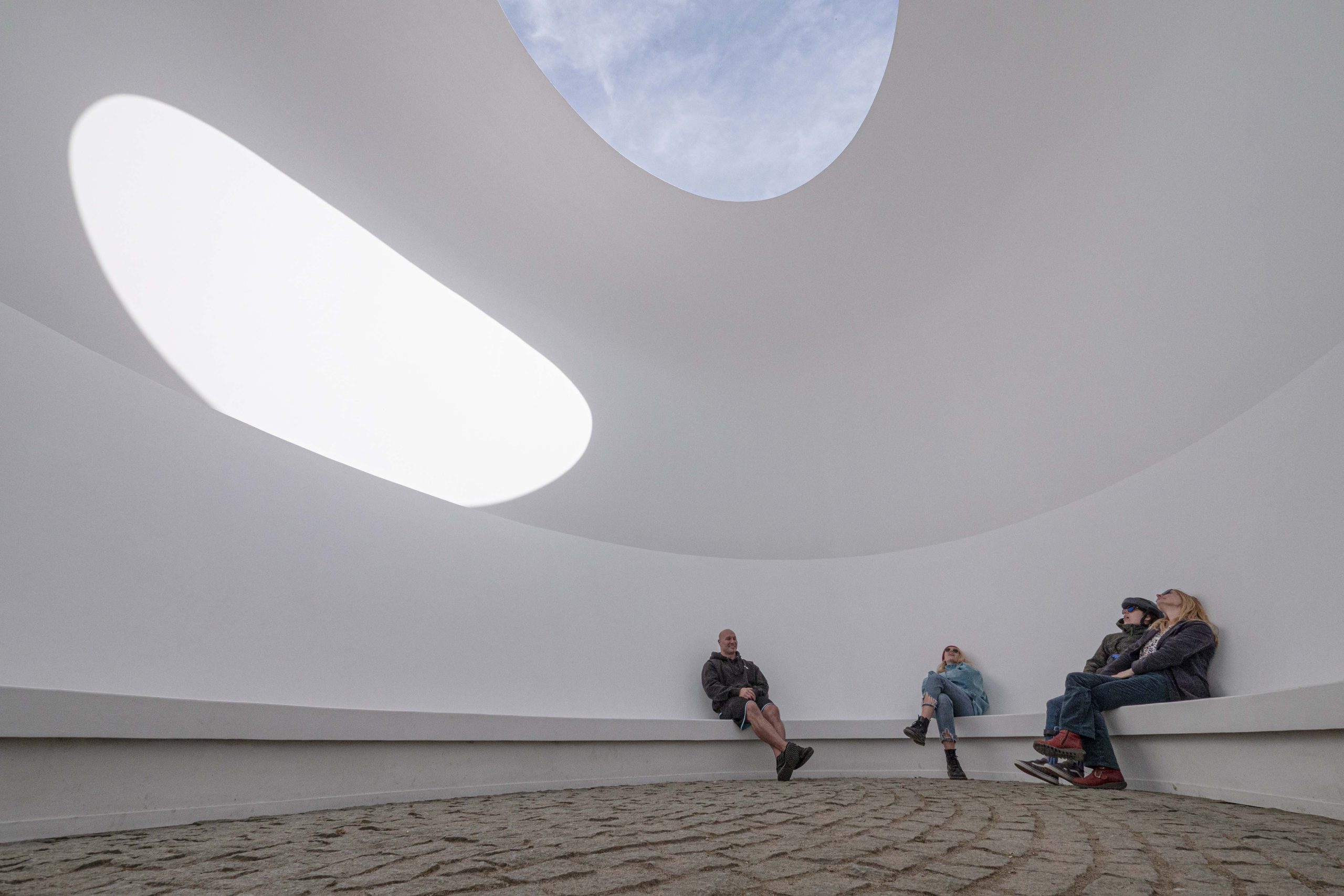
The James Turrell Skyspace at Tremenheere Sculpture Gardens
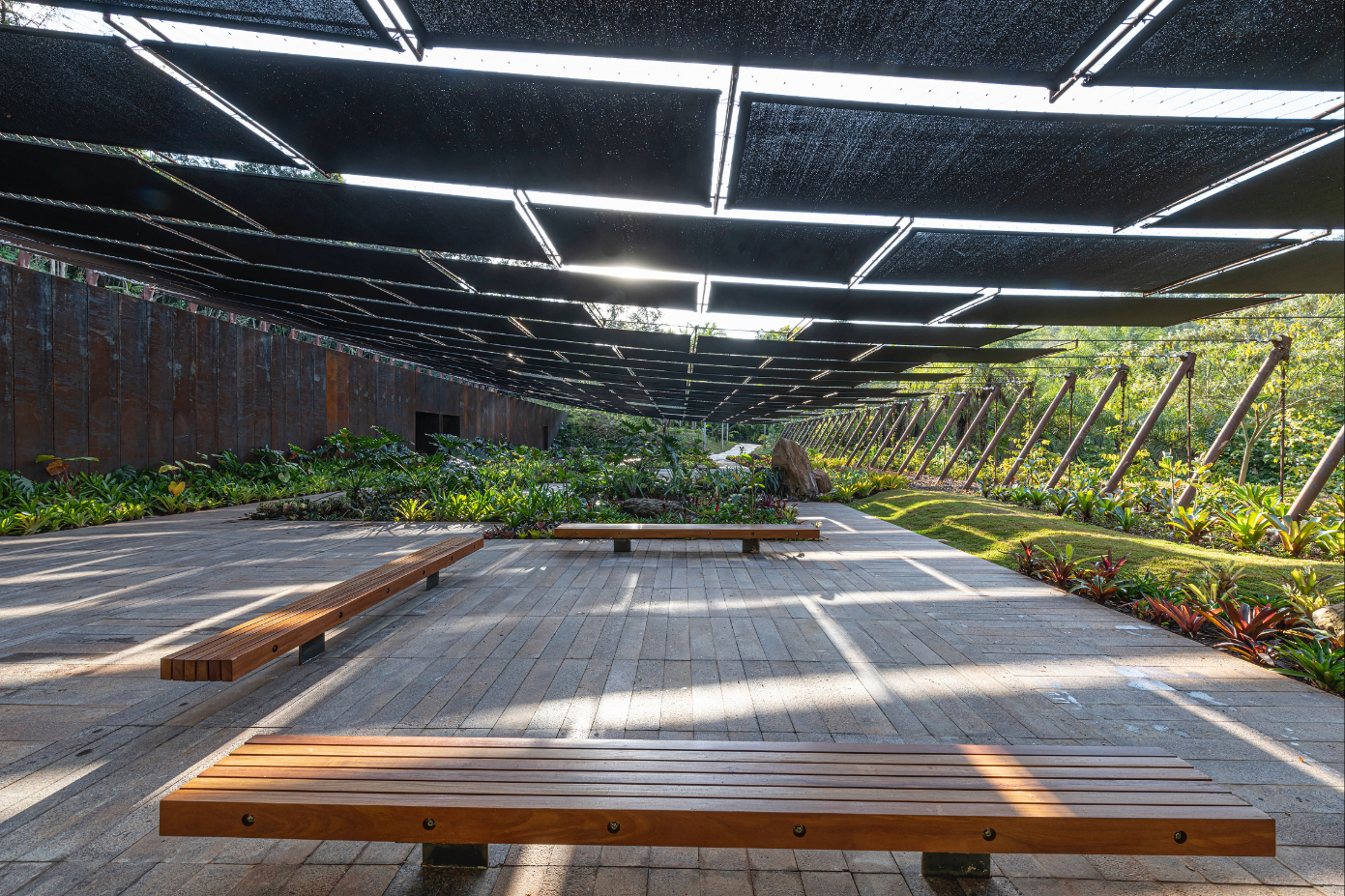
The Yayoi Kusama Gallery at Inhotim Institute
Where Art and Landscape Meet
Both gardens are shaped by a shared philosophy: that art and landscape should evolve together.
At Tremenheere, sculpture is carefully placed within the terrain, each work positioned in relation to planting, light and movement.
The balance between artwork and setting is essential. “Some artworks make big ripples – they have a big psychological presence… and that needs more space,” Armstrong notes. “Other works can look kind of unloved or lonely if they’re not presented in a stage with appropriate planting.” This sensitivity is reflected in the garden’s emphasis on foliage and form, where architectural planting provides contrast rather than competing with the art.
At Inhotim, the same relationship unfolds at a different scale. Part botanical garden and part contemporary art museum, the site brings together landscape, architecture and culture across hundreds of hectares.
“During spring, flowering cycles, fresh foliage and changes in light conditions can significantly alter the atmosphere surrounding artworks,” says Nogueira.
Works are often created specifically for their surroundings, becoming inseparable from the environment. Nogueira explains, “At Inhotim, the landscape is an integral part of how artworks are perceived. As a living system, the garden continuously reshapes the context around each piece.”
Increasingly, this includes a focus on native plants, using landscape design not only as an aesthetic tool but as a way to support research and deepen public engagement with Brazil’s flora.
“Dalton Paula brought us an invitation to research native plants that are important for African religions, and we are working together to choose these plants and bring them to the gallery, to other gardens, and even to the nursery of Inhotim,” Carmo says. “For us, this is a very good example of how nature and art can work together.”
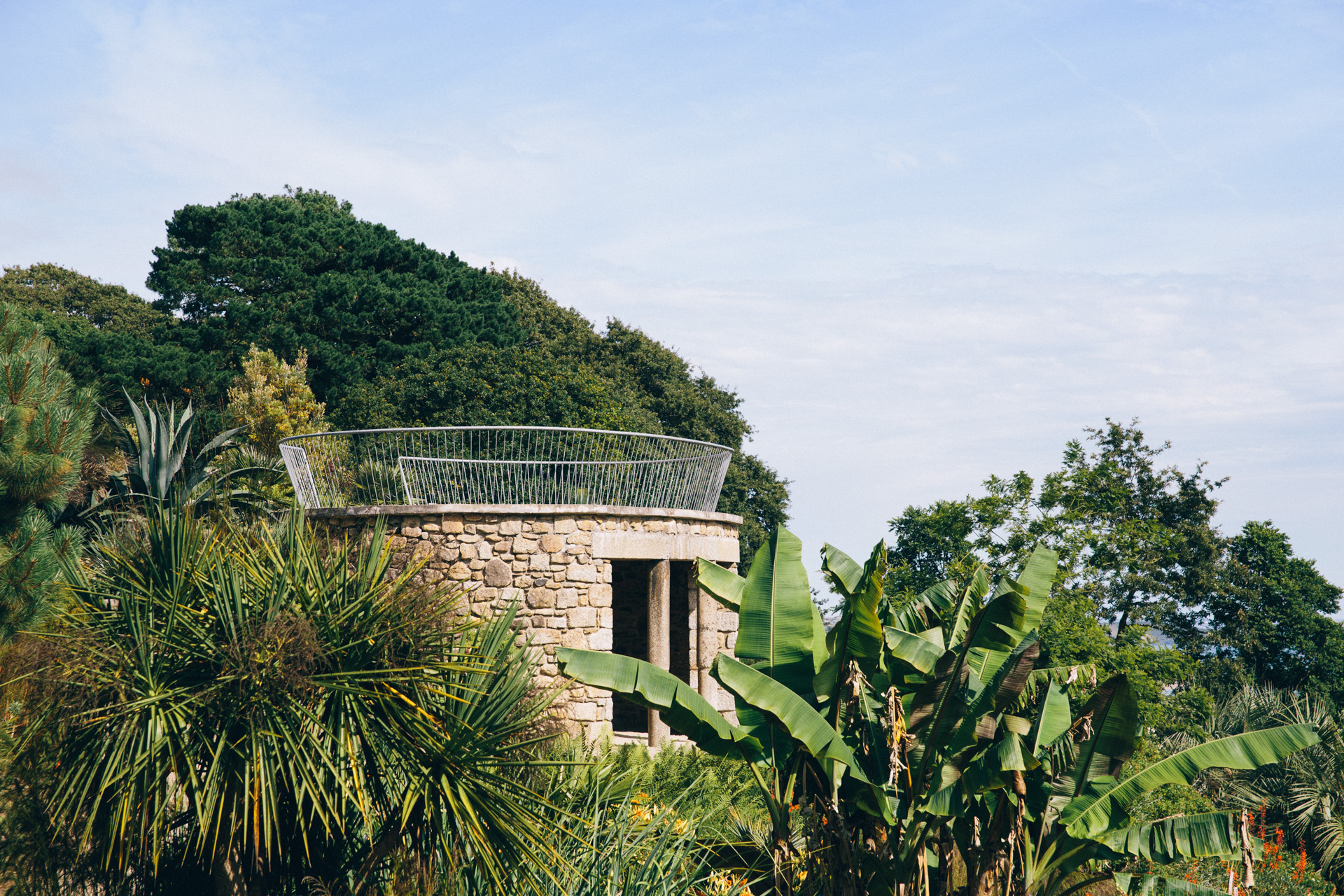
Tremenheere overlooks the wild Cornish coastline, from the pagoda visitors can enjoy an elevated perspective
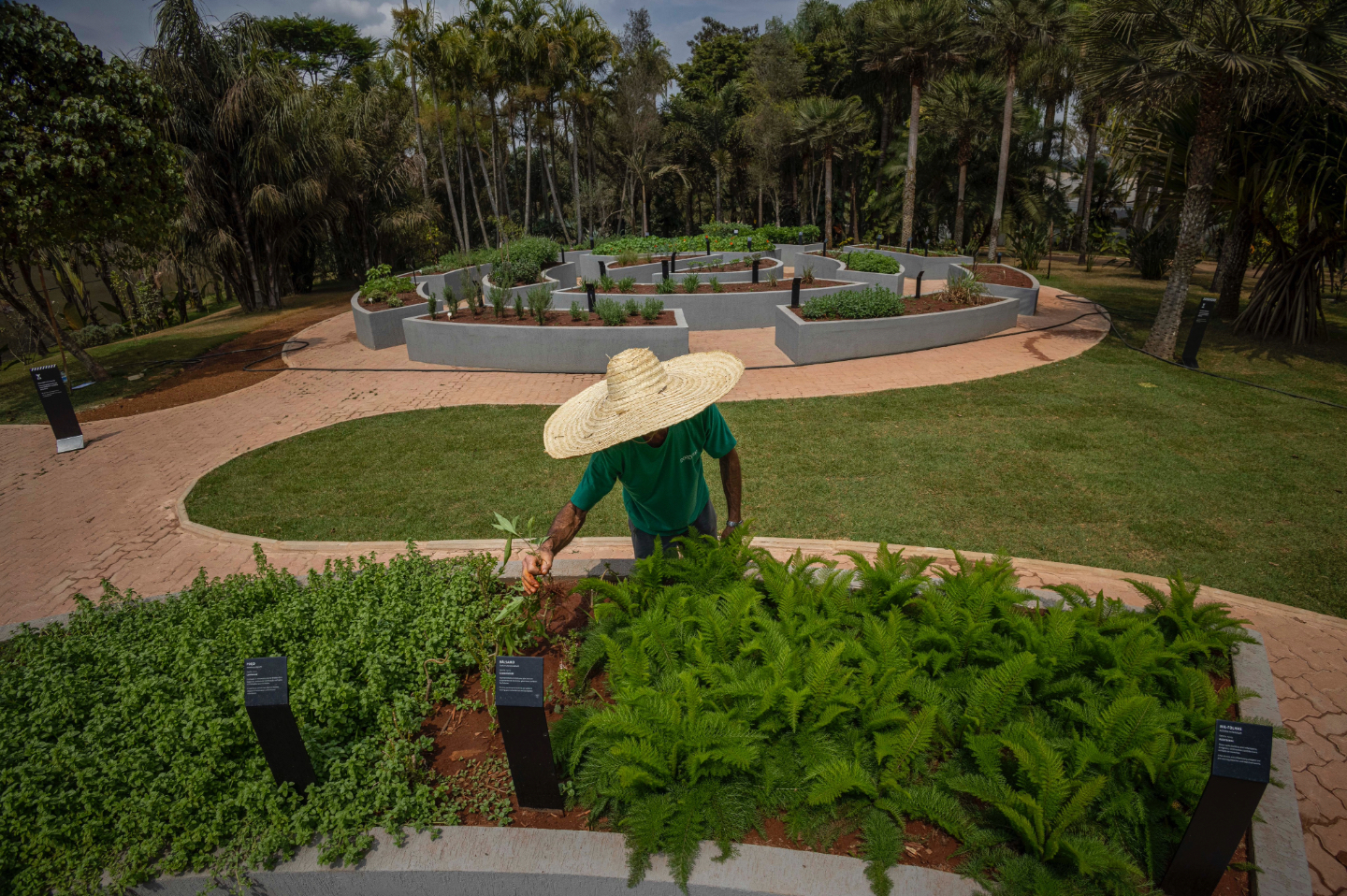
The Yayoi Kusama Gallery at Inhotim Institute
Rooted and Global
The two gardens also reflect different botanical perspectives. In Cornwall, gardens like Tremenheere are shaped by a long history of plant exploration.
“Brazil and the UK differ in many ways, but certainly in our floral legacy we’re very poor. We’ve got only 600 species of plants in the UK that are indigenous to this country,” says Armstrong.
While the UK has relatively limited native biodiversity, this has been offset by centuries of global plant collecting, bringing species from across the world into a uniquely diverse horticultural setting. Cornwall’s mild climate, rarely extreme in either direction, allows for an unusually wide range of planting, including subtropical species. “We’ve got a kind of a horticulturally dazzling climate for growing all sorts of things,” adds Armstrong.
At Inhotim, the emphasis is increasingly local. Situated between the Atlantic Forest and the Cerrado, the garden sits within a meeting point of two of Brazil’s richest ecosystems. This position informs a growing focus on native species and ecological identity, shaping both the landscape and its role in research, conservation and education.
“We are in the frontier of two of the most biodiversity places in Brazil,” says Nogeuira. “We have a Cerrado domain and the Atlantic Rainforest domain – and we are exactly in the transition between these two different biomes.”
“That is our main focus, our strong national horticultural identity,” he adds.
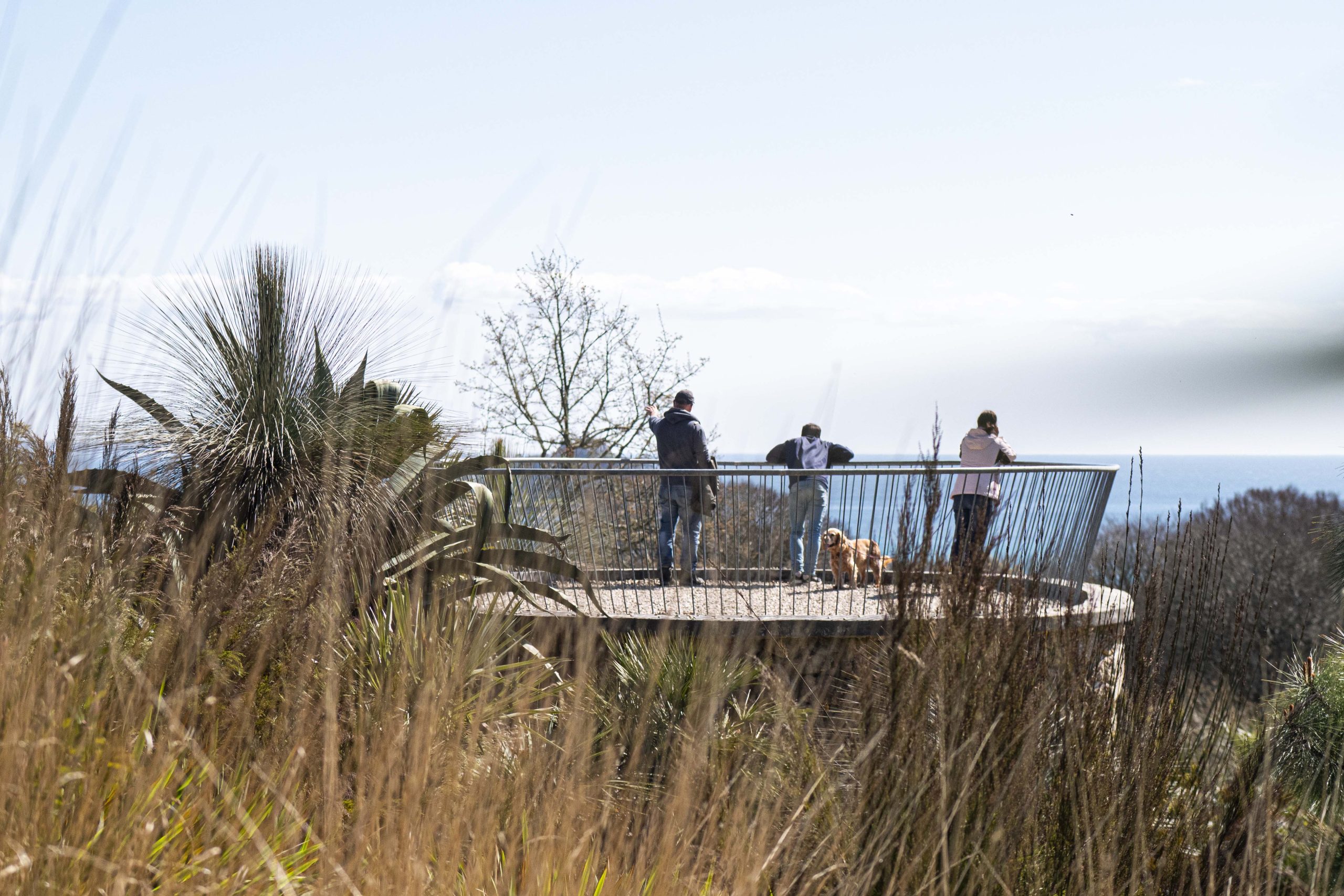
From the pagoda at Tremenheere, visitors have a unique vantage point
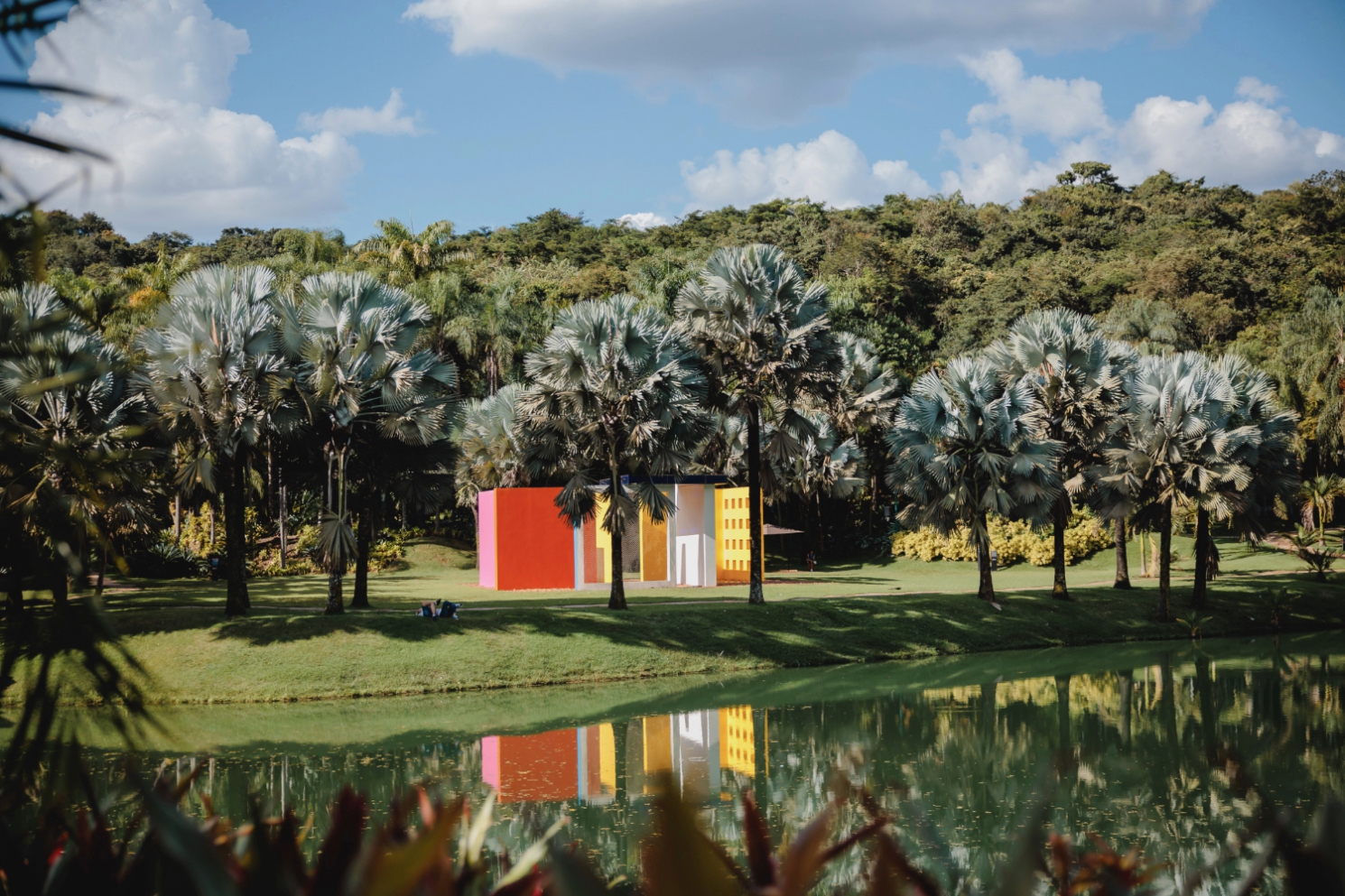
Magic Square by Hélio Oiticica at Inhotim Institute
A Shared Season
This first pairing is part of Spring Worldwide, a series of fourteen explorations linking Cornwall with remarkable gardens across the globe.
Each garden offers a unique perspective on spring, revealing how the season unfolds differently depending on climate, landscape and local culture.
In Cornwall, spring emerges as soft light filtering through bare branches and delicate colour close to the woodland floor at Tremenheere Sculpture Gardens. In Brazil, it arrives with rain, rapid growth and vibrant blooms sweeping across vast canopies at the Inhotim Institute.
Together, these gardens show that while spring in gardens may look different around the world, it always signals renewal, growth and the beginning of a new cycle in nature.
We hope you enjoyed the first instalment of our Spring Worldwide series. Keep an eye on the Great Gardens of Cornwall blog and social channels – there are plenty more fascinating stories coming your way very soon.