
Magnolias and Canopies: Spring in Cornwall and Cape Town
Spring Worldwide pairs the Great Gardens of Cornwall with remarkable gardens across the globe, exploring how the same season unfolds across different climates, landscapes and cultures. Each pairing becomes an exchange, revealing spring as something both shared and distinct.
In this pairing, a sheltered Cornish valley meets a historic public garden in Cape Town. At Bonython Estate Gardens in Cornwall and Arderne Gardens in South Africa, spring is shaped by different climates and horticultural traditions, but connected through a shared focus on seasonal change and flowering.
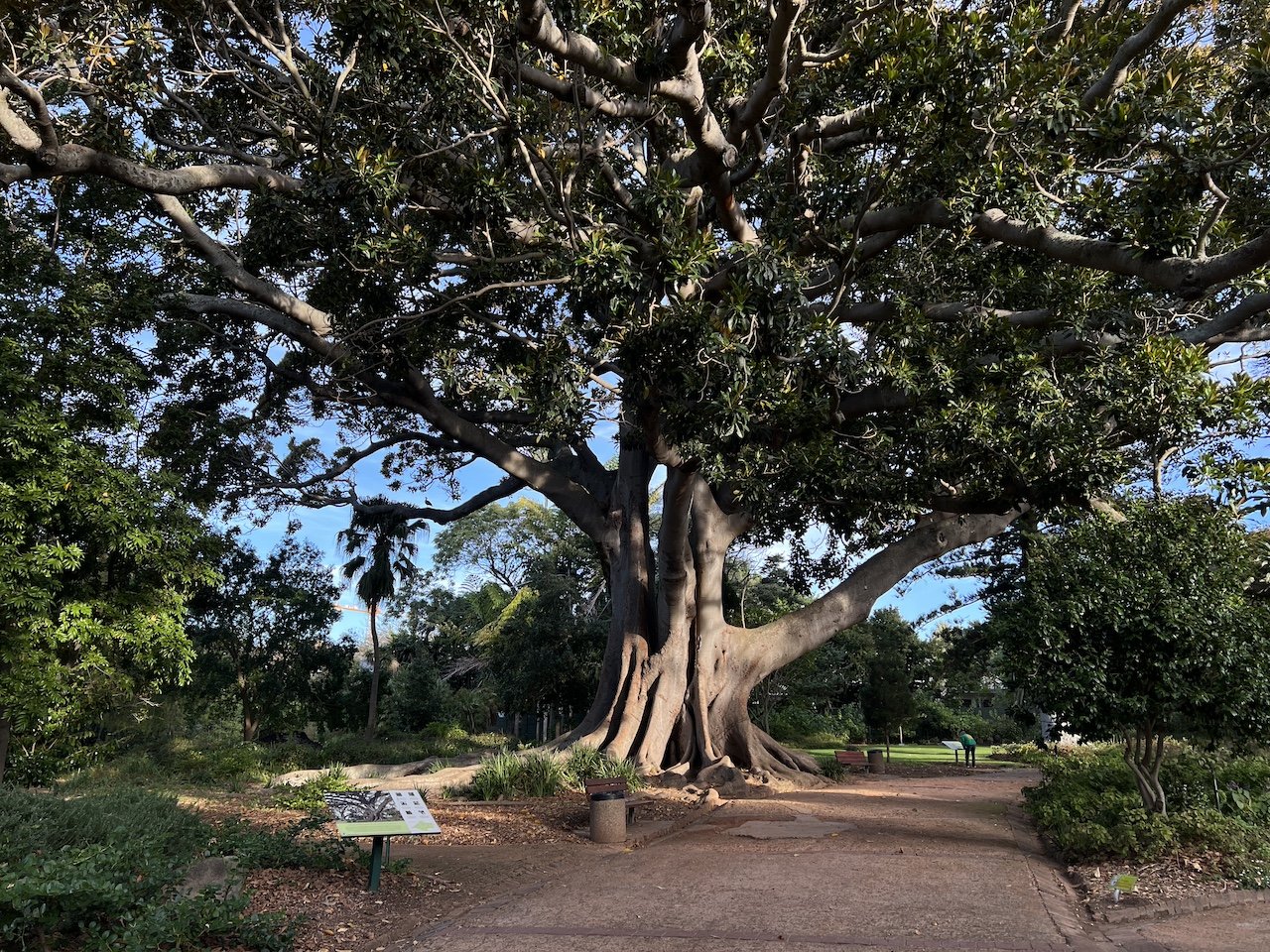
At Arderne Gardens, Spring appears subtly amongst the evergreen trees. [Photo credit: Marie Frei]
Magnolia Season and Spring Colour
At Bonython Estate Gardens, on the Lizard Peninsula in Cornwall, spring unfolds gradually. Set within a sheltered valley, the garden is structured around water, with pools, streams and crossings reflecting light and seasonal change.
Early spring is defined by magnolias. Their pale, sculptural flowers appear on bare branches, marking one of the first visible shifts in the season. The display is brief, with petals falling quickly and often settling on water or along paths.
“Magnolias are often the first clear signal of spring here, flowering on bare branches before most other growth begins and making full use of the available light in the valley,” explains Sue Nathan, owner at Bonython Estate Gardens. “There’s a short window when the magnolias are at their peak, and you notice how quickly the petals fall. They often collect on the water, which becomes part of the seasonal display.”
At Arderne Gardens in Cape Town, spring is shaped differently. Located in Claremont, the garden is a historic arboretum established in the nineteenth century, known for its diverse collection of mature trees and ornamental planting. As the season changes, flowering species subtly begin to emerge across the garden, creating pockets of colour within the broader evergreen landscape.
“As most of the trees are not deciduous, a lot are confers, there isn’t an overall bursting into life of the tree canopy as there would be in Europe,” says Clare Gibbon, representative of the Friends of the Arderne Gardens (FOTAG). “The main interest of our trees is that they came from Gondwana, the great ancient continent of the Southern Hemisphere and were conifers around in the time of the dinosaurs. Our cycads are perhaps the most well known representatives of such living fossils.”
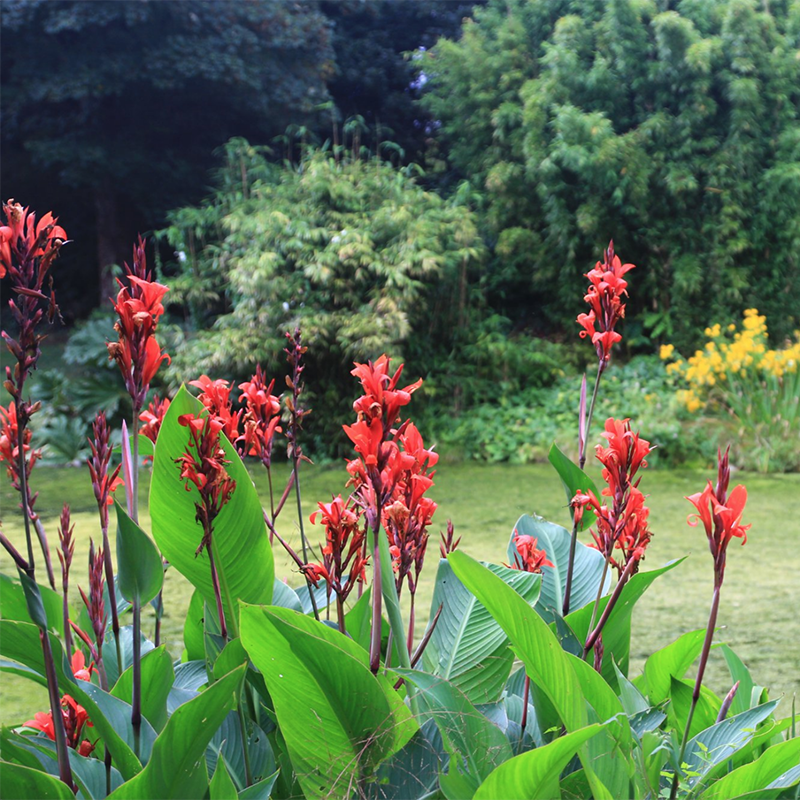
Throughout the spring and summer Bonython bursts with new flower growth.
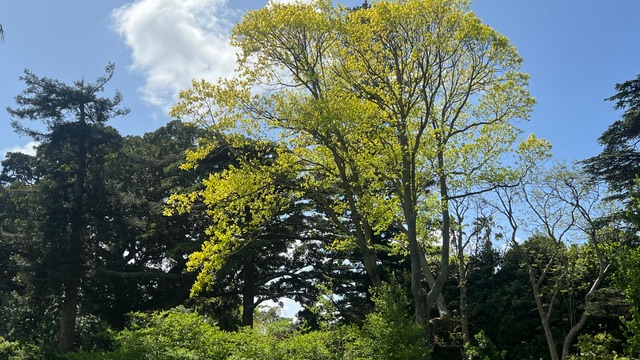
A deciduous tree at Arderne is bright green with new leaf.
Water Gardens and Tree Canopy
At Bonython, spring remains closely tied to the structure of the landscape. Magnolia petals fall onto still water, and early flowering plants emerge within a framework of paths, terraces and managed planting. As the season develops, later flowering shrubs and trees add depth and variation, but always within a composed setting shaped by enclosure and reflection.
At Arderne, spring is experienced through the canopy. The garden’s mature trees create height and scale, and seasonal flowering appears throughout this structure rather than in a single concentrated display. Colour is dispersed across the space, framed by large trunks, open lawns and established planting. Fallen petals and leaves gather beneath the trees, adding a secondary layer of texture at ground level.
“Our main marker of the arrival of spring, which happens in October in Cape Town, would be the bursting into flower of clumps of shrubs, such as rhododendrons, which provide splashes of colour scattered throughout the park,” says Gibbon.
“There are, of course, some deciduous trees which drop their leaves and clearly rejoice in the lengthening and warming of days as winter recedes,” she adds. “I think it is fair to say that the fact that (the deciduous trees) are surrounded by trees that do not have the same cycle makes them stand out even more clearly.”
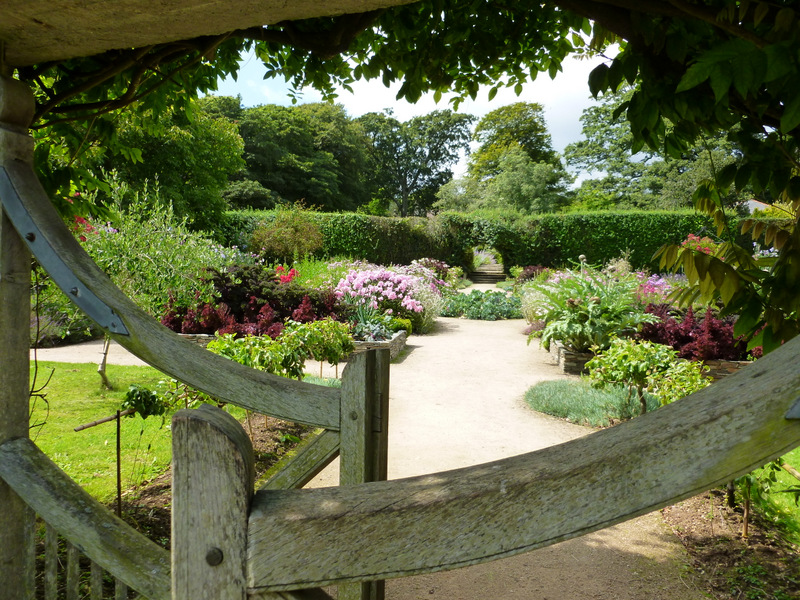
Bonython offers a series of beautifully curated and planted areas.
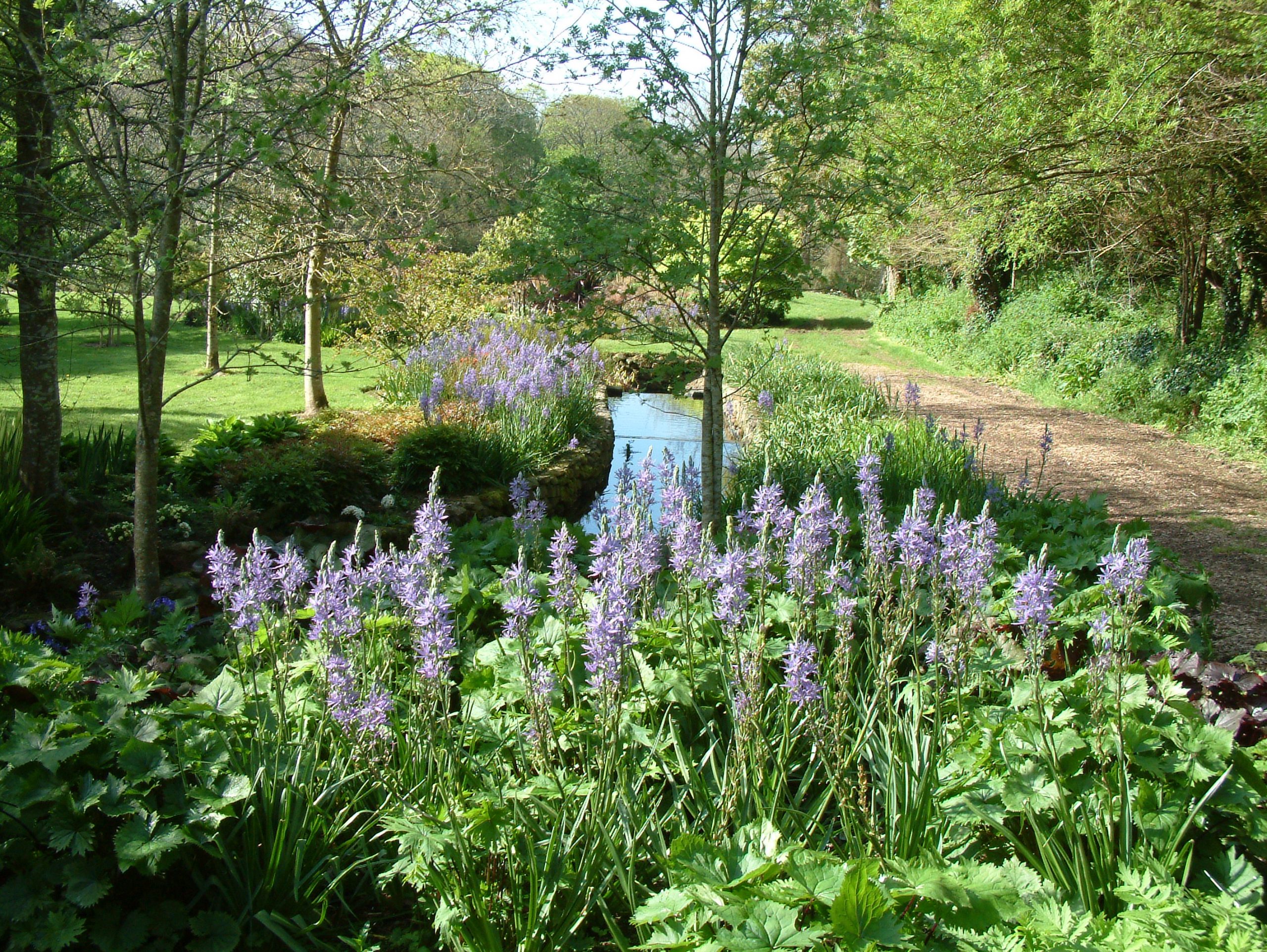
Bonython in springtime is tranquil and fragrant.
Heritage and Horticultural Identity
Both gardens are shaped by long-term cultivation and care.
At Bonython, planting reflects a Cornish gardening tradition influenced by microclimate and plant collection. The sheltered valley allows a wide range of species to thrive, but the overall approach remains controlled, with planting arranged to complement the structure of the landscape.
“Planting here is closely tied to the structure of the valley, with species selected and positioned to respond to shelter, moisture, and light conditions,” says Nathan. “There’s a balance between allowing plants to perform naturally and maintaining a clear framework, so that seasonal change reads as part of a composed landscape.”
Arderne Gardens has a different horticultural history. Established in 1845, it developed as part of a private estate before becoming a public garden. Over time, it has evolved into an arboretum with a strong identity rooted in its tree collection and historic layout. This long development has created a landscape where planting reflects both heritage and ongoing management.
“The other fascination of the arboretum is that the collection begun as a result of the ambition of Ralph Henry Arderne – who was a timber importer – to make a garden from trees from around the world,” adds Gibbon. “Living in Cape Town, a vibrant hub of sea trade in the nineteenth century, he was able to commission the ships’ captains to collect and bring him seeds and saplings as they sailed past the southern tip of Africa.”
According to Gibbon, Arderne was able to establish the treasured diverse collection of trees that we see today. As the garden became more well known, Henry Mathew Arderne, was able to create important international horticultural links and, for instance, brought in trees from Kew Gardens.
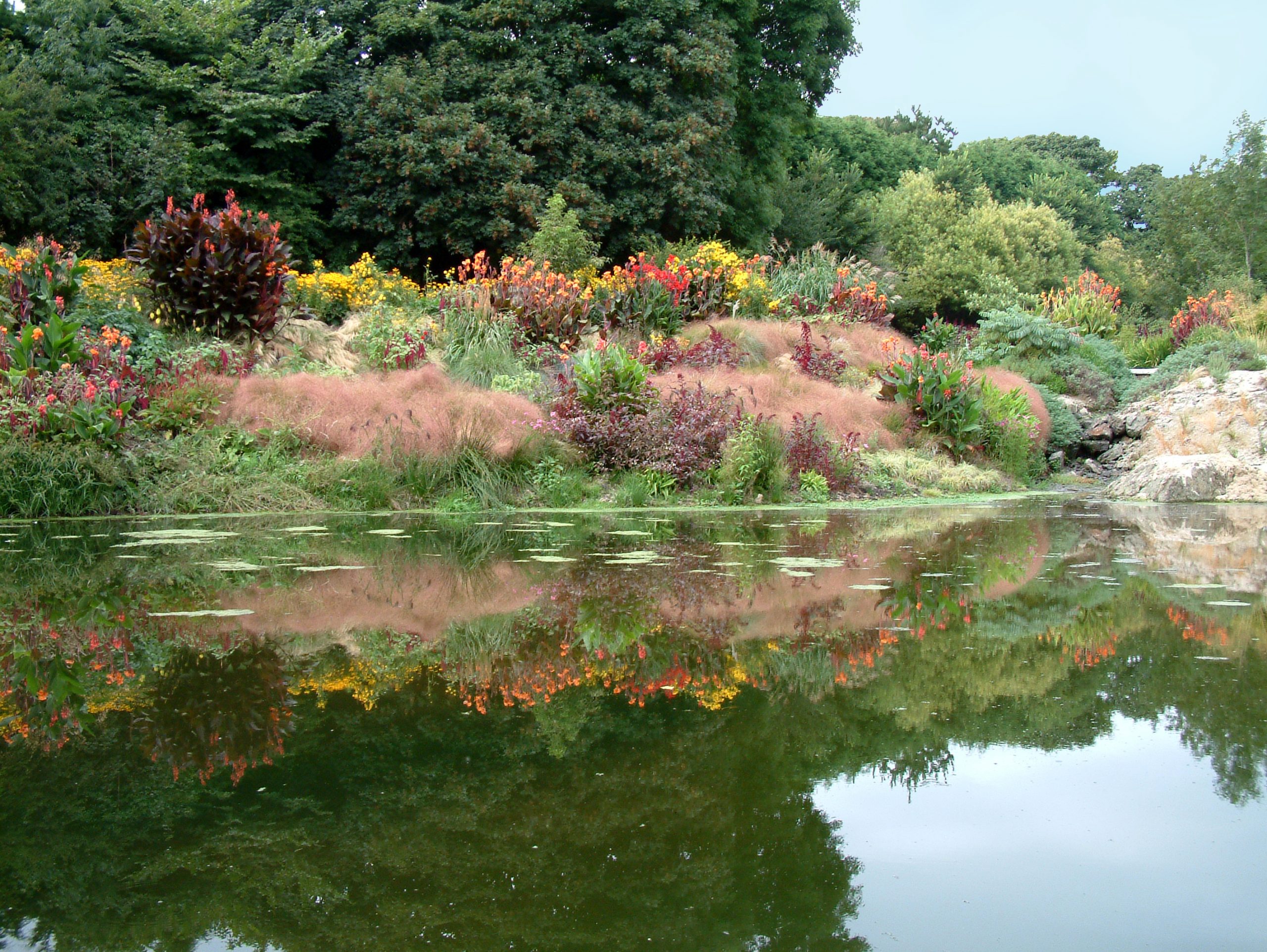
The lake at Bonython provides a reflective canvas for spring petals to fall upon.
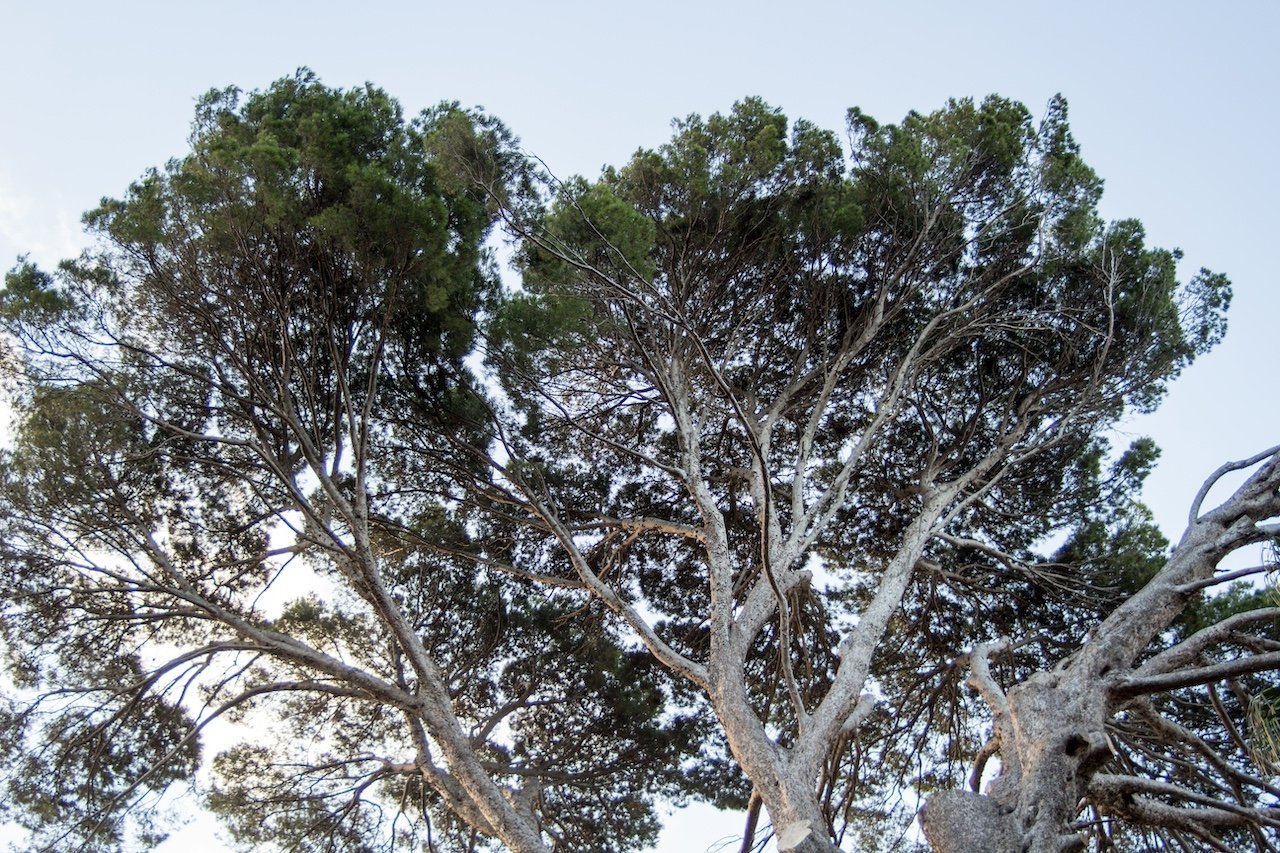
Arderne is home to many beautiful pine trees. [Photo credit: Marie Frei]
Maritime Mildness and Mediterranean Seasonality
In Cornwall, mild maritime conditions create a longer, more gradual season. Temperature extremes are rare, and plants respond with steady growth and extended flowering periods. At Bonython, this results in a spring that unfolds over time, influenced by shelter, moisture and consistent conditions.
In Cape Town, a Mediterranean climate creates more defined seasonal shifts. Winter rainfall is followed by brighter, drier conditions, and the transition into spring is marked by subtle renewed growth across the landscape.
“Seasonal change is relatively subtle here,” says Gibbon. “But towering evergreen trees like the giant Australian Araucaria bidwilli provide a monumental backdrop for the spring flowers we do have, such as rhododendrons.”
Both gardens demonstrate how seasonal planting can be expressed in different ways.
At Bonython, early flowering trees such as magnolias set the tone for spring, followed by a sequence of shrubs and perennials that extend the season. The emphasis is on progression and composition, with each phase contributing to an overall structure.
At Arderne, seasonal change is less about a single defining plant and more about variation across the garden. Different species respond at different times, creating a shifting pattern of growth and colour within the established framework of trees and open space.
“In Cornwall, the combination of mild temperatures and shelter allows spring to extend over a longer period, with different species flowering in sequence rather than all at once,” explains Nathan. “What stands out is the length of the season. Conditions allow for steady, continuous development, rather than a single concentrated burst of growth.”
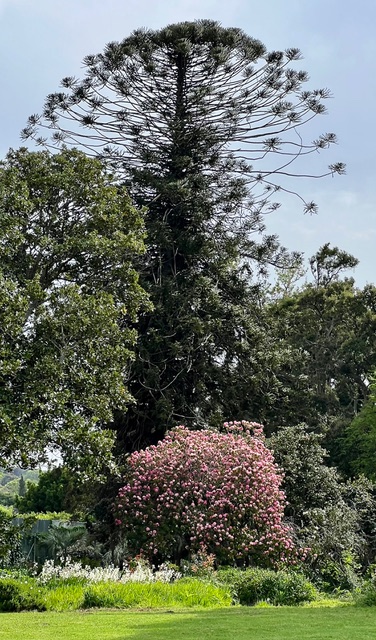
At Arderne, trees like the Australian Aracaria Bidwilli provide a towering backdrop for spring blooms.
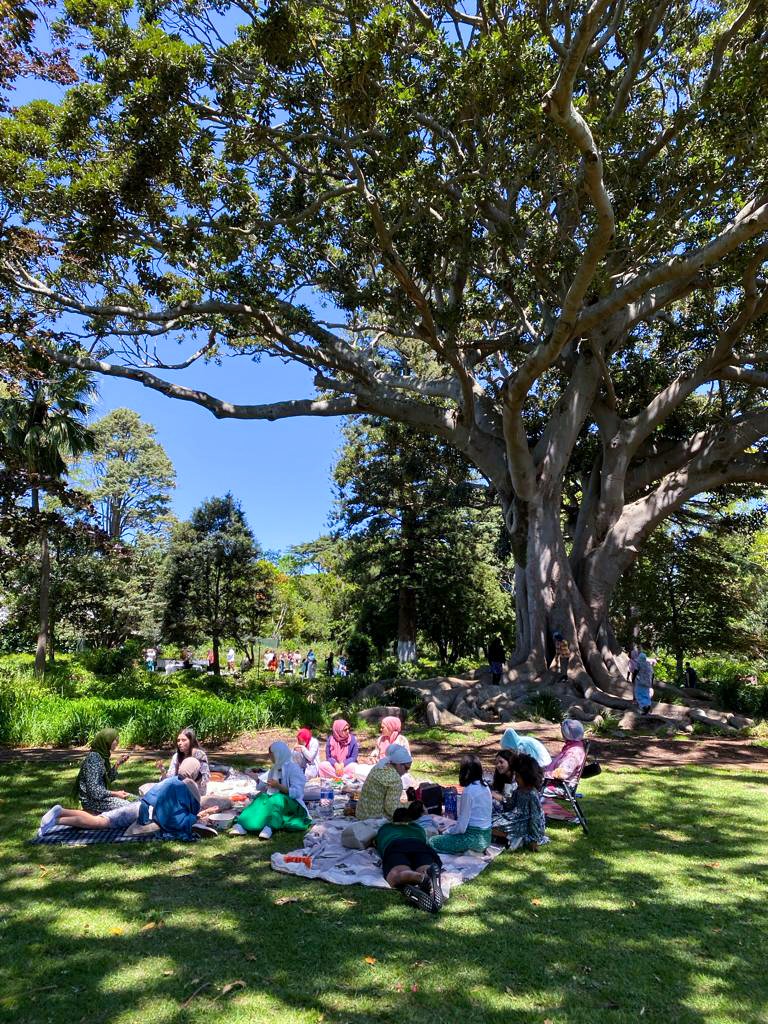
At Arderne, many mature trees provide dappled shade from the Spring sunshine.
A Shared Season
This pairing is part of Spring Worldwide, a series linking Cornwall with gardens across the globe. Each garden offers a different perspective on spring, shaped by local conditions and horticultural context.
At Bonython Estate Gardens, spring is gradual and structured, defined by magnolias, water and carefully composed planting. At Arderne Gardens, it is expressed through seasonal change across a mature arboretum, where growth and flowering emerge within an established landscape.
Together, these gardens show how spring can vary widely in character, while still representing the same cycle of growth, renewal and change.
We hope you enjoyed this instalment of the Spring Worldwide series. Keep an eye on the Great Gardens of Cornwall blog and social channels for more stories exploring spring in gardens around the world.