
Valleys and Azaleas: Spring in Cornwall and New York
Spring Worldwide pairs the Great Gardens of Cornwall with remarkable gardens across the globe, exploring how the same season unfolds across different climates, landscapes and cultures. Each pairing becomes an exchange, revealing spring as something both shared and distinct.
In this pairing, Trebah Gardens, a sub-tropical valley garden on the Helford River, meets the New York Botanical Garden (NYBG). Spring is expressed through lush, layered plantings, seasonal rhythm, and the visual impact of flowering across structured and natural landscapes.
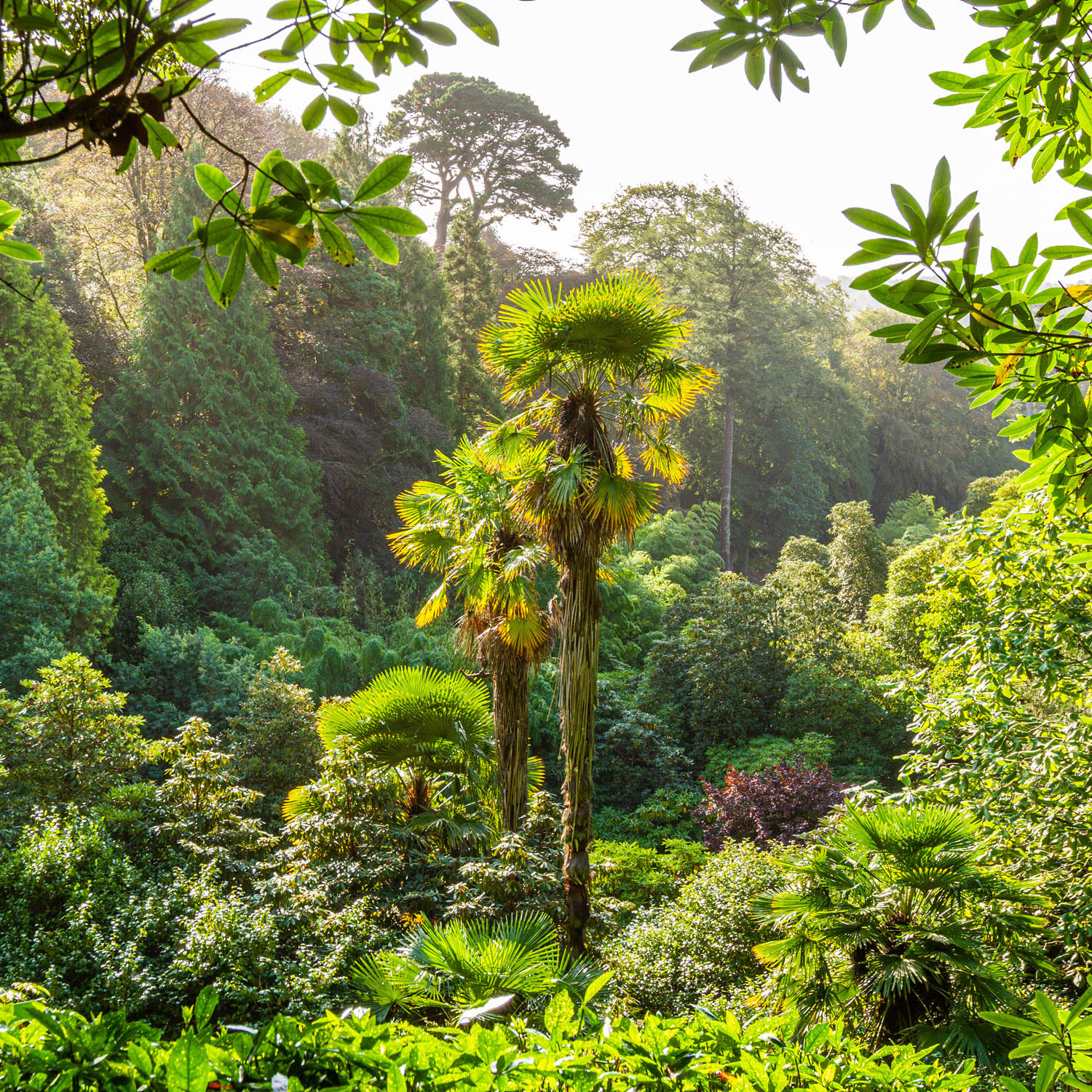
Trebah benefits from a unique microclimate, allowing for widely varied planting.
An Early Start
The first signs of spring at Trebah rarely arrive with any great fanfare.
Long before much of Britain has fully shaken off winter, small pockets of colour begin appearing amongst the garden’s evergreen framework. Pale magnolia flowers emerge against glossy foliage. Camellias follow. Then, almost imperceptibly at first, the season gathers momentum.
“Spring starts quite early, because of the mild climate in Cornwall, but particularly as Trebah is situated in a sheltered valley,” explains James Lewis, Marketing Manager at Trebah Garden. “The spring definitely starts with the magnolias, and then pushes on with camellias and things like that, and then rhododendrons. And then it really snowballs with bloom and colour.”
That sense of gradual acceleration is one of the defining characteristics of spring at Trebah. Nestled within a steep wooded valley that descends towards its own private beach on the Helford River, the 26-acre garden benefits from a remarkable microclimate. Frost is rare, and snow rarer still. The shelter provided by the valley allows plants from across the globe to flourish in conditions that would challenge them elsewhere in Britain.
The garden itself owes much of its character to nineteenth-century plant collecting. “In 1831, Trebah was bought by the Fox family, and they started turning it from native wooded valley into a Victorian leisure garden where they can display all of the exciting plants that they’re finding around the world,” says Lewis. “Things like rhododendrons from the Himalayas.”
Many of those early introductions still thrive today. Some of the magnolias, camellias and rhododendrons scattered throughout the valley are now more than a century old, their mature canopies creating the layered structure that makes Trebah feel less like a conventional garden and more like a landscape discovered rather than designed.
“Lower down in the valley, over winter especially, it can be quite battered by winds and easterly winds,” says Lewis. “Planting in the valley gave the plants this protection.”
“The garden is very green over winter,” Lewis explains. “Then in February these pockets of colour come in with the magnolias, in pale pinks and whites. Some of them are really scented, and you can smell them from across the other side of the garden.”
“Come April, the leaves are back on the trees,” says Lewis. “And the rhododendrons are quite a huge variety of colours, more or less every colour of the rainbow. It is so vibrant.”
“In terms of scent, that starts in winter,” Lewis explains. “There was specific planting about 30 years ago to make sure Trebah is a scented garden.”
The sequence begins with winter-flowering shrubs such as Christmas Box before moving through magnolias, primroses and bluebells. “Then as you go from winter to spring, you get the scent of the magnolias,” Lewis continues. “Then the bluebells and the primroses, which en masse create this incredible perfume on the spring breeze.”
By the late spring, the garden is filled with the scent of rhododendrons, “Some of them are quite sweet, like melon,” he adds.
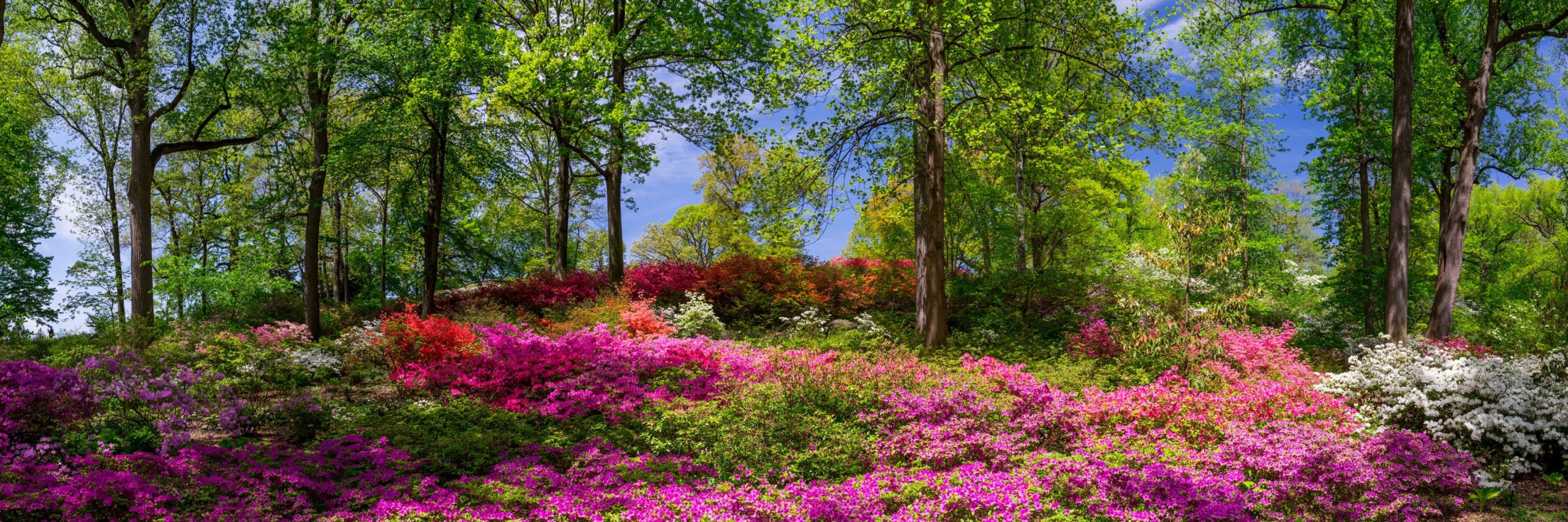
NYBG is home to many beautiful flower species.
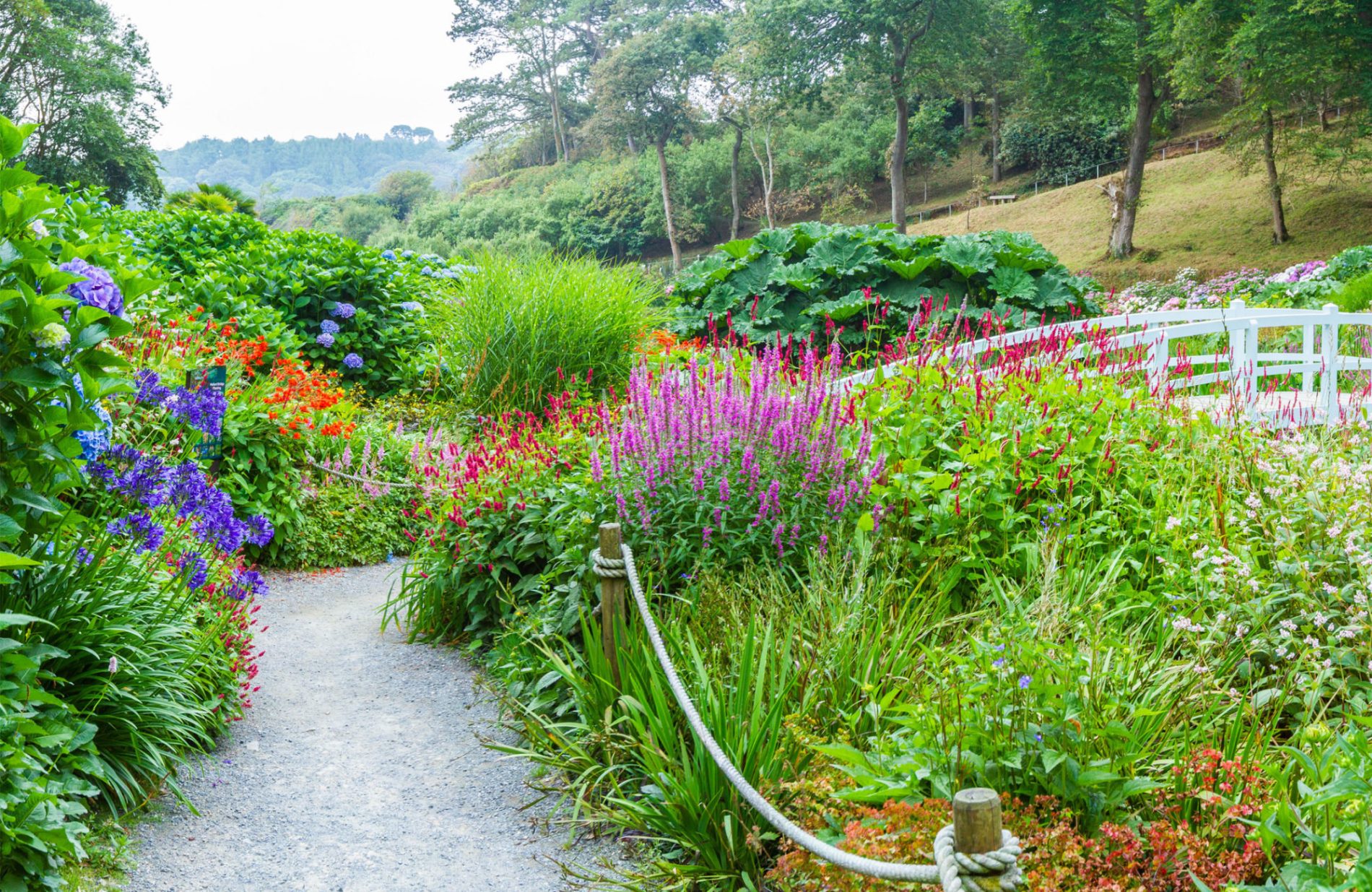
Trebah is unique in Cornwall in that the gardens have colorful blooms throughout the summer.
From Frost to Flower
More than 3,000 miles away, spring arrives rather differently.
At the New York Botanical Garden, winter loosens its grip with greater drama. Snow retreats. Temperatures climb. Across the institution’s 250-acre landscape, flowering trees and bulbs emerge in spectacular succession, drawing visitors away from the density and noise of New York City into a landscape defined by seasonal change.
Groves of flowering cherries and magnolias announce the season’s arrival in late March. Millions of daffodils follow. By April, lilacs perfume the air while an entire hillside erupts into colour.
At the centre of this display sits one of the garden’s most celebrated spring features.
“The Azalea Garden is the perfect place to mark spring’s all-too-rapid progression at NYBG,” says Todd Forrest, Arthur Ross Vice President for Horticulture and Living Collections.
Spread across eight acres beneath a canopy of mature trees, the Azalea Garden showcases nearly the entire progression of the season, from the first snowdrops of late winter to the hydrangeas that herald early summer.
Ancient oaks, tulip trees and elms rise above the planting, while sweeping drifts of azaleas and rhododendrons follow the contours of a hillside shaped thousands of years ago by glaciers.
“We designed the Azalea Garden from the heavens down to the soil,” says Forrest. “The high canopy of oaks, tulip trees, elms and other native trees frame the sky, while masses of azaleas, rhododendrons and other shrubs trace the complex contours of the hillside site.”
Beneath them lies an intricate tapestry of bulbs, flowering perennials, ferns and grasses designed to extend the season and create visual richness at every scale.
The result is a landscape that rewards both close attention and broad perspective.
“If a visitor chose to walk through the Azalea Garden once with their eyes focused on the ground plane and again with their eyes fixed across the garden’s vast open spaces, they would experience two completely different gardens in the same space,” Forrest says. “The ground plane is all nuance and texture while a long view rewards with the spectacle of coordinated clouds of colour.”

Trebah is famous for its varied and exotic plant collection.
The Procession of Spring
Despite their differences, both gardens share a similar understanding of spring as a process rather than a single moment. In each, the season unfolds through carefully orchestrated succession, with one plant handing the baton to the next.
“Spring at the Garden differs from year to year,” says Forrest. “Everyone eagerly awaits the flowering cherries, magnolias and daffodils but prepares themselves for the upheaval caused by a late frost or an early warm spell.”
To mitigate that uncertainty, NYBG relies on careful plant selection, choosing early-, mid- and late-flowering varieties to ensure colour persists regardless of what the weather delivers.
At Trebah, the challenge is different. The sheltered valley and warm Gulf Stream influence create a growing environment unlike almost anywhere else in Britain and even other parts of Cornwall.
“Compared to East and North Cornwall, spring comes much earlier in West Cornwall,” says Lewis. “When our bluebells are nearly done, in places like Tregrehan the bluebells are still out in force.”
By early summer, the two gardens begin to diverge further still. At Trebah, once the rhododendrons have faded and the valley settles briefly into shades of green, another great display begins.
“It gets to June, and the garden goes quite green again,” says Lewis. “Everything’s lush, the rhododendrons have stopped flowering, and everything’s in leaf. And then at the end of June, the hydrangeas start to kick in down at the bottom of the valley.” Covering almost two acres, the display has become one of Trebah’s defining summer spectacles.
“The hydrangeas are a major draw for us,” Lewis says. “The colour palette is quite uniquely pastel-y, and because we’ve got acidic soil, a lot of the hydrangeas go blue.”
Pastel blues mingle with whites, creams, pinks and soft purples beneath the valley canopy, creating a completely unique palette of summer colour that continues well into autumn and even winter, when the ageing flower heads fade into muted vintage tones.
“Colour in summer gardens in Cornwall is quite hard to come by,” Lewis says. “Spring is the main season to shout about for Cornish gardens. So we’re really lucky to have two acres of hydrangeas that are really colourful.”
Seen together, Trebah and the New York Botanical Garden reveal the remarkable adaptability of spring itself. One unfolds in a sheltered Cornish valley shaped by Victorian plant hunters and Atlantic weather systems. The other plays out across a vast urban landscape where glaciers, native woodland and carefully curated collections combine to create one of America’s great seasonal displays.
The details differ. The timing shifts. The palette changes. Yet both gardens ultimately offer the same invitation: to slow down, pay attention and witness a landscape waking into life.
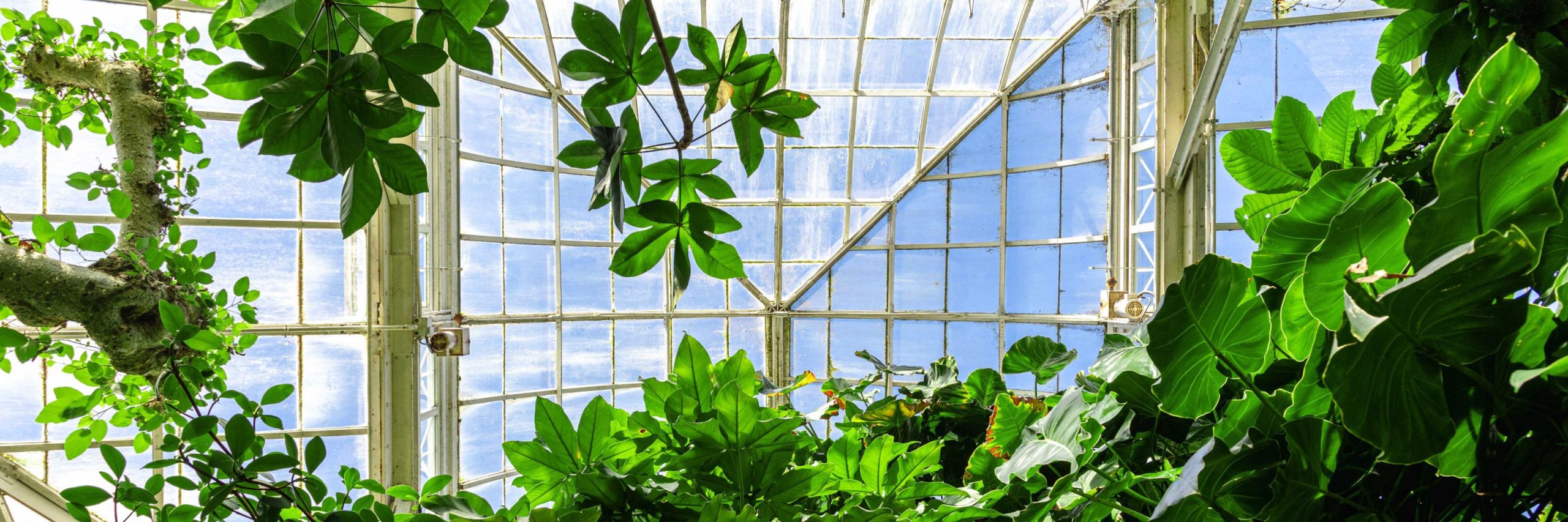
NYBG a broad spans 250 acres in the Bronx, New York.
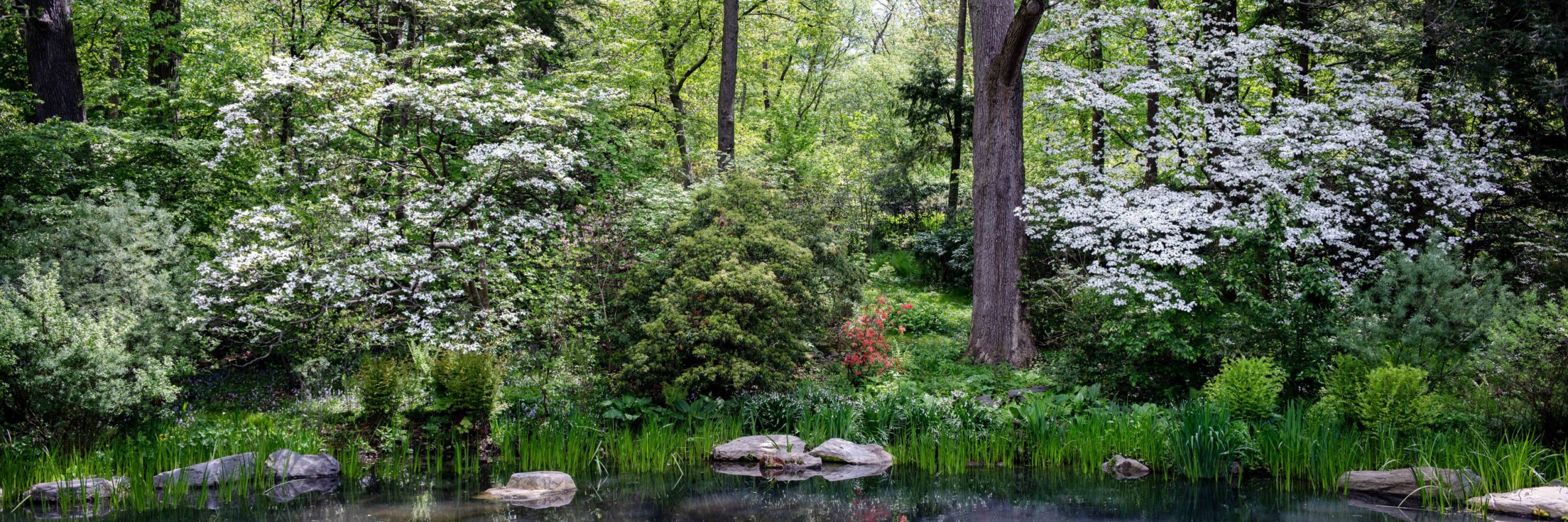
NYBG was established in 1891 and is a National Historic Landmark in the US.
A Shared Season
Both gardens celebrate spring as a sensory and visual experience, though interpreted differently. At Trebah, spring is layered, intimate, and discovered over time through sheltered walks and hidden views. At the New York Botanical Garden, spring is expansive, volumetric, and choreographed to create impact across terraces and open spaces.
From Cornwall’s lush valley to New York’s structured terraces, spring manifests in contrasting yet equally compelling ways.
We hope you enjoyed this instalment of our Spring Worldwide series. Keep an eye on the Great Gardens of Cornwall blog and social channels, there are plenty more fascinating stories coming your way very soon.