
Clifftop Stages and Living Spectacle: Spring in Cornwall and Pennsylvania
Spring Worldwide brings together the Great Gardens of Cornwall with gardens across the globe, looking at how the season plays out in different climates and landscapes.
This time, the focus is on two theatre gardens: the Minack Theatre in west Cornwall, and Longwood Gardens in Pennsylvania. Both are places where gardens are designed to be experienced as much as viewed, but the similarities largely stop there.
At the Minack, the garden clings to a south-facing cliff above the wild Atlantic Ocean, with pathways and planting styles dictated by the landscape and the elements. At Longwood, it spreads out across carefully composed and meticulously orchestrated large-scale grounds.
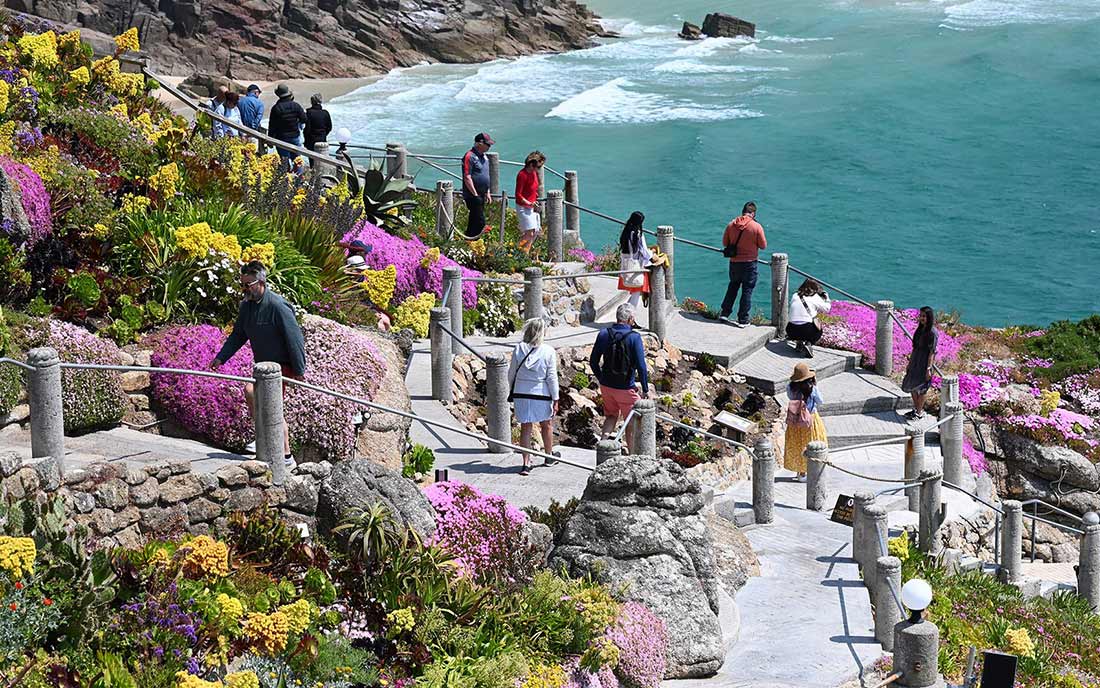
On a cliff over the Atlantic, the Minack is exposed to the temperamental coastal climate.

Longwood Gardens is a spectacle of clean lines and pristine, carefully-considered design.
Two Theatre Gardens, Two Spring Performances
At the Minack, the garden itself is carved into the coastline, a series of raised beds and small garden areas divided by paths that step down towards the sea. As co-head gardener Jeff Rowe explains,
“We’re frost‑free, predominantly because of the salt, high light levels, and all the granite around us, which acts like storage heaters during the colder months,” explains co-head gardener, Jeff Rowe. “And you’ve got that big body of salt water which helps keep the temperatures up.”
The result is a remarkably mild microclimate that feels far removed from a typical English garden. “Our biggest challenge is the wind,” continues Rowe. “Everything is looking battered at the moment… the leaves are desiccated on one side and lovely green on the other.”
Spring at the Minack is characterized by rapid and dramatic height and a slow building of colour. Growth accelerates with day length, creating a sense of vertical expansion across the terraces as plants stretch upwards in striking gestures.
“We’ve got things like the Puya, which have massive flower spikes that grow literally inches a week, up to eight to ten feet tall,” says Rowe. “For me, spring at the Minack is in the echium spikes.”
As day length increases, growth accelerates and bulbs related to bluebells erupt into massive purple‑blue panicles, while aeoniums throw up domes of gold. Succulent carpets that spill over retaining walls begin to blaze with bright pink flowers, turning the terraces into vivid ribbons of colour.
There is a distinct feeling of the garden stretching upwards. Bromeliads thicken into great grassy clumps, then rocket skywards sending up thick, architectural flower spikes that can reach head height and beyond. Echiums, which spend their first year close to the ground, suddenly switch gear in their second spring and shoot up in a rush, transforming from unassuming rosettes into towering blue, bee‑laden columns.
At Longwood, spring takes the form of a grand horticultural performance across one of the world’s most elaborate garden theatres. Designed gardens, fountains, and an Openir Theatre create a sequence of outdoor rooms where planting is staged with precision and scale. More than 150,000 tulips and other bulbs, magnolia trees, and flowering cherry trees rise and fall in orchestrated waves across its iconic 600-foot-long Flower Garden Walk.
“At Longwood, spring unfolds like a seasonal performance: tulips, magnolias, and flowering trees appear in carefully timed sequences across the garden theatre,” says a representative of Longwood Gardens. “Every terrace and fountain is part of the stage design, guiding visitors through a living composition of colour, movement, and water.”
At Longwood, performance is designed into the landscape itself and horticulture, architecture, and spectacle operate as one.
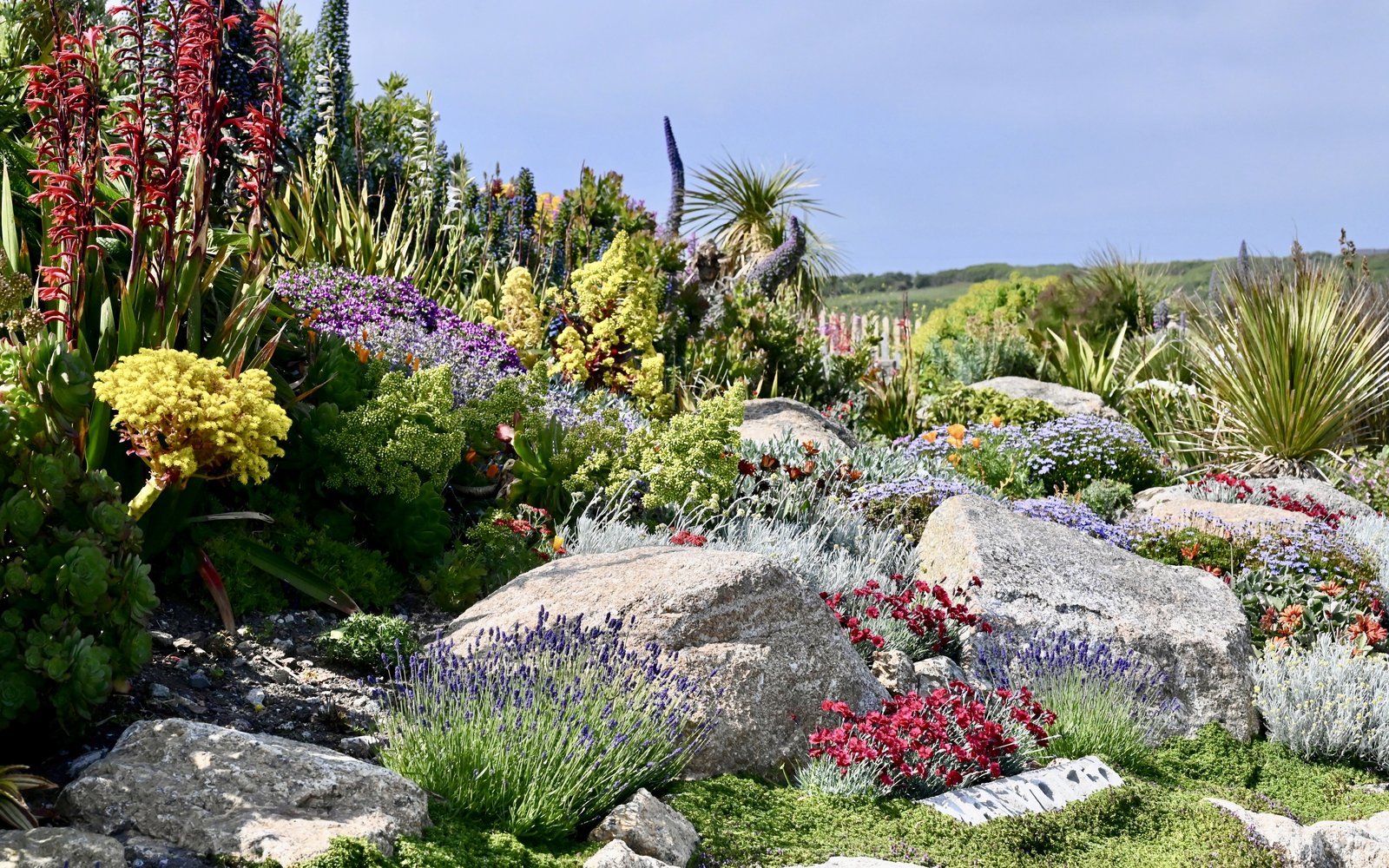
The texture and vivid colour of the planting at the Minack is as breathtaking as the views across the ocean.
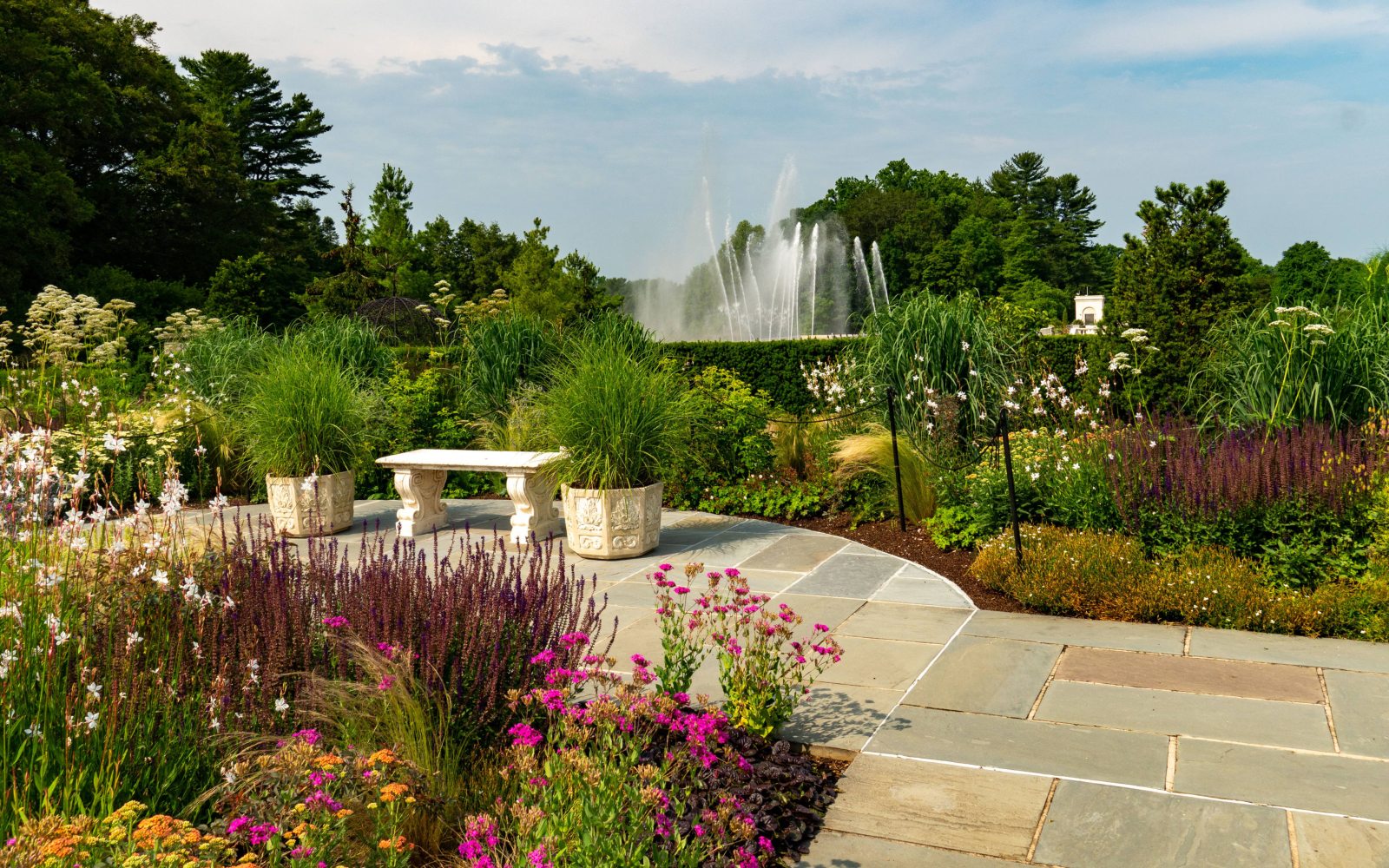
The Rose Garden at Longwood is a carefully-designed peaceful enclave.
Light, Stage, and Atmosphere
At the Minack, light and exposure are inseparable from the experience of the garden. The high light levels Rowe describes intensify both colour and contrast, while the open ocean setting ensures constant atmospheric change. Planting is revealed and reshaped moment by moment, with the brightness of the cliffside amplifying every form and texture.
At Longwood, light is amplified through design. Reflecting pools, axial views, and structured planting beds are arranged to heighten seasonal drama. As visitors move through the gardens, light is used to frame key vistas, stage transitions, and reveal moments of floral intensity.
“Light is an essential part of the garden’s composition, reflecting off water, stone, and planting to enhance the sense of theatre across the landscape,” says a representative of Longwood Gardens.
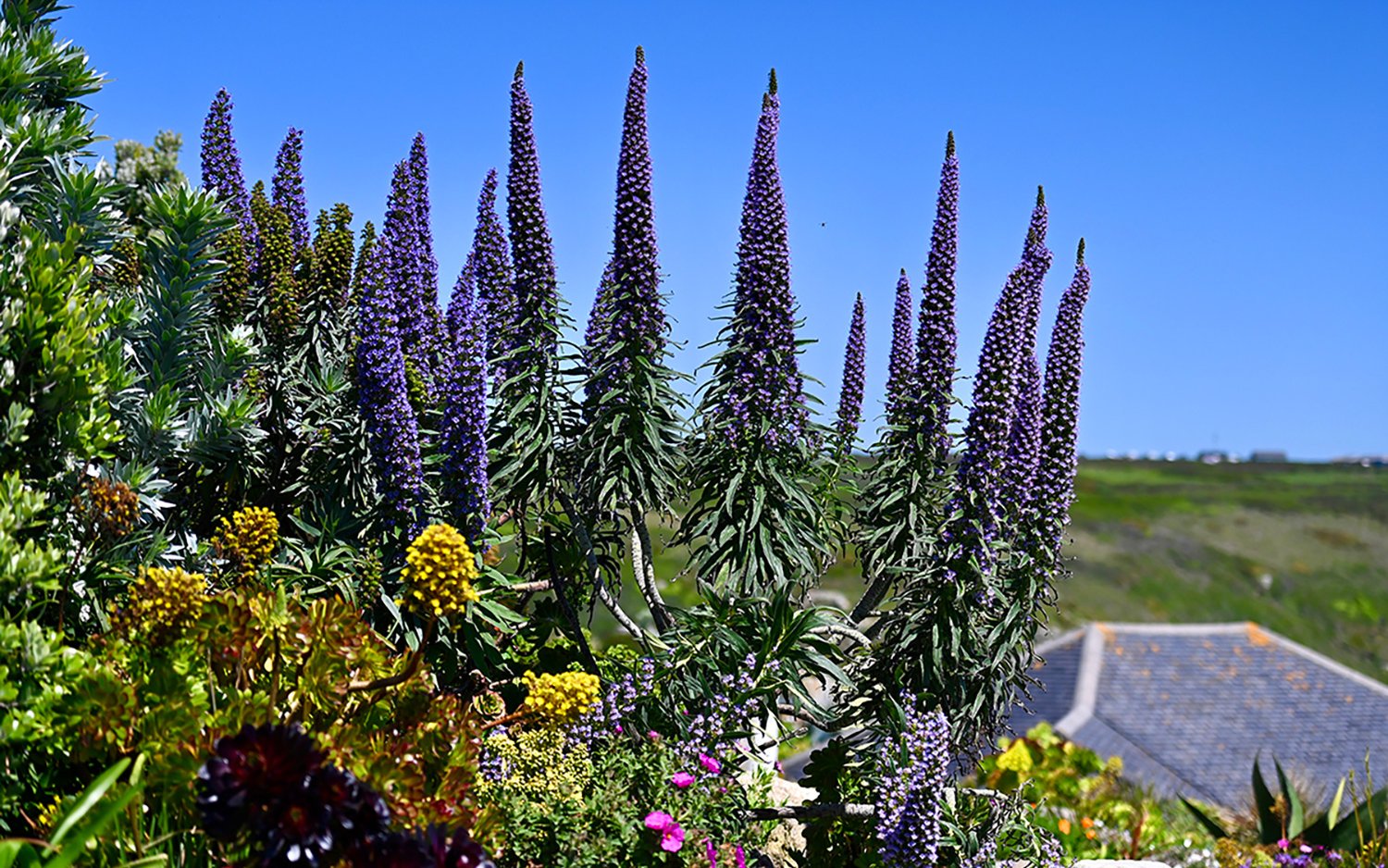
Tall, purple Echium spikes are a marker of Spring at the Minack.
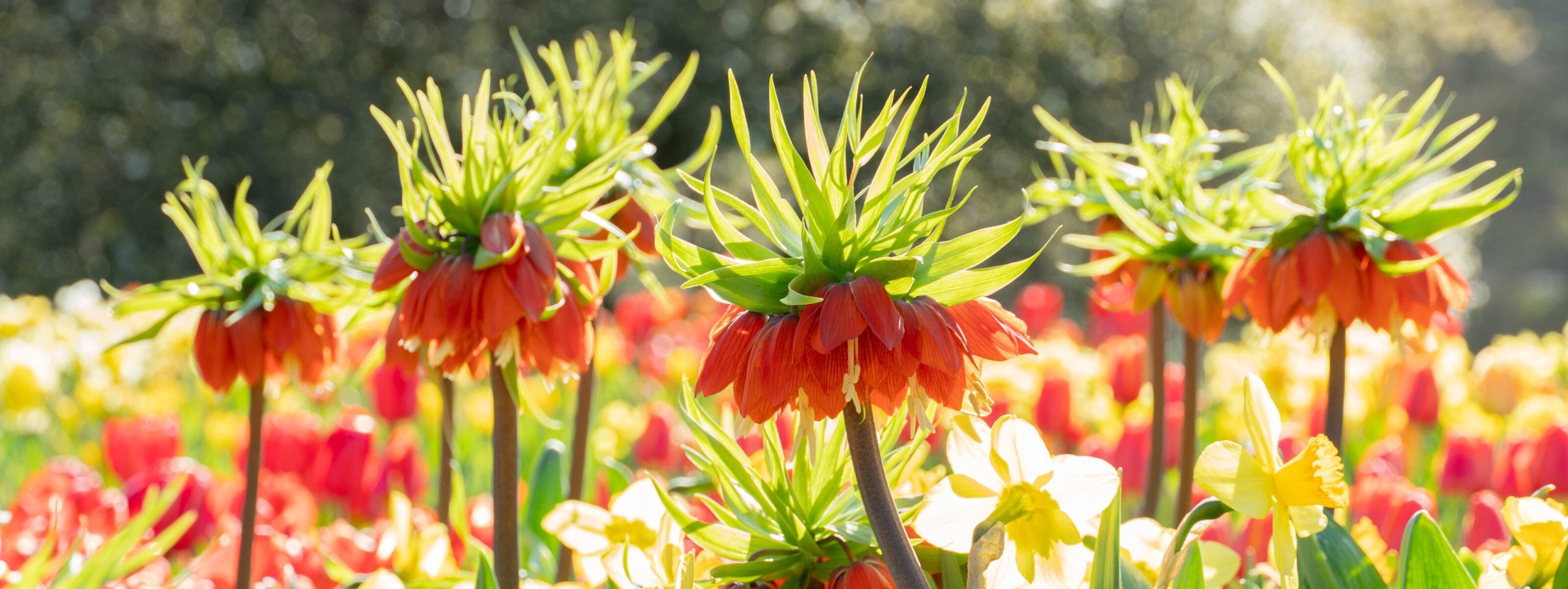
Carefully curated flowers begin to emerge in the springtime at Longwood.
Movement, Climate and Geology
At the Minack, movement is shaped by the physical structure of the cliff. Paths divide the garden into intimate sections, guiding visitors through a sequence of spaces that reveal planting, geology, and sea in turn. The experience is both immersive and immediate, tied closely to the contours of the site.
Self-seeding plants add unpredictability to this journey. As Rowe notes, “We have probably hundreds of echiums around the site. None of them have been planted – they’re all self-seeded.”
These spontaneous appearances blur the boundary between design and chance. “It’s always a lottery where they’ll come up each year,” he continues. “It’s a nice weed to have. The insects love them, and visitors love them too.”
At Longwood, movement is structured. Winding paths guide guests through woodland beauty, tranquil water features, and tree-lined allees. The experience shifts between intimacy and spectacle, culminating in expansive views over its grand gardens.
“The garden is designed as a progression of experiences,” says a representative of Longwood Gardens. “Every path leads to a new moment of performance, whether intimate planting or large-scale fountain displays.”
At the Minack, planting is shaped by the site’s geology. Granite bedrock breaks down into a gritty, acidic, sharply draining soil with relatively little organic matter. Rather than fighting this, the gardeners lean into it.
The result is a collection that favours drought‑tolerant, coastal and southern-hemisphere plants over traditional British woodland stalwarts. Succulents and Mediterranean species thrive alongside agaves from Mexico and the southern United States, while tough Australian shrubs – like a diminutive Melaleuca on the top path – shrug off the wind and reward visitors with clouds of small, bottlebrush‑like flowers.
By contrast, shade‑loving, moisture‑hungry plants simply don’t belong here; ferns, for example, crisp in the constant sun and exposure.
Rowe sums up its distinctiveness simply: “We’re totally unique because of our location – it’s simply ‘location, location, location’.”
At Longwood, controlled horticultural systems extend and enhance the seasonal performance. Irrigation, microclimates, and curated plant collections allow for a prolonged and highly orchestrated spring display across multiple spaces.
“Careful environmental management allows the garden to extend its seasonal performance, ensuring continuous bloom and evolving colour throughout spring,” says a representative of Longwood Gardens.
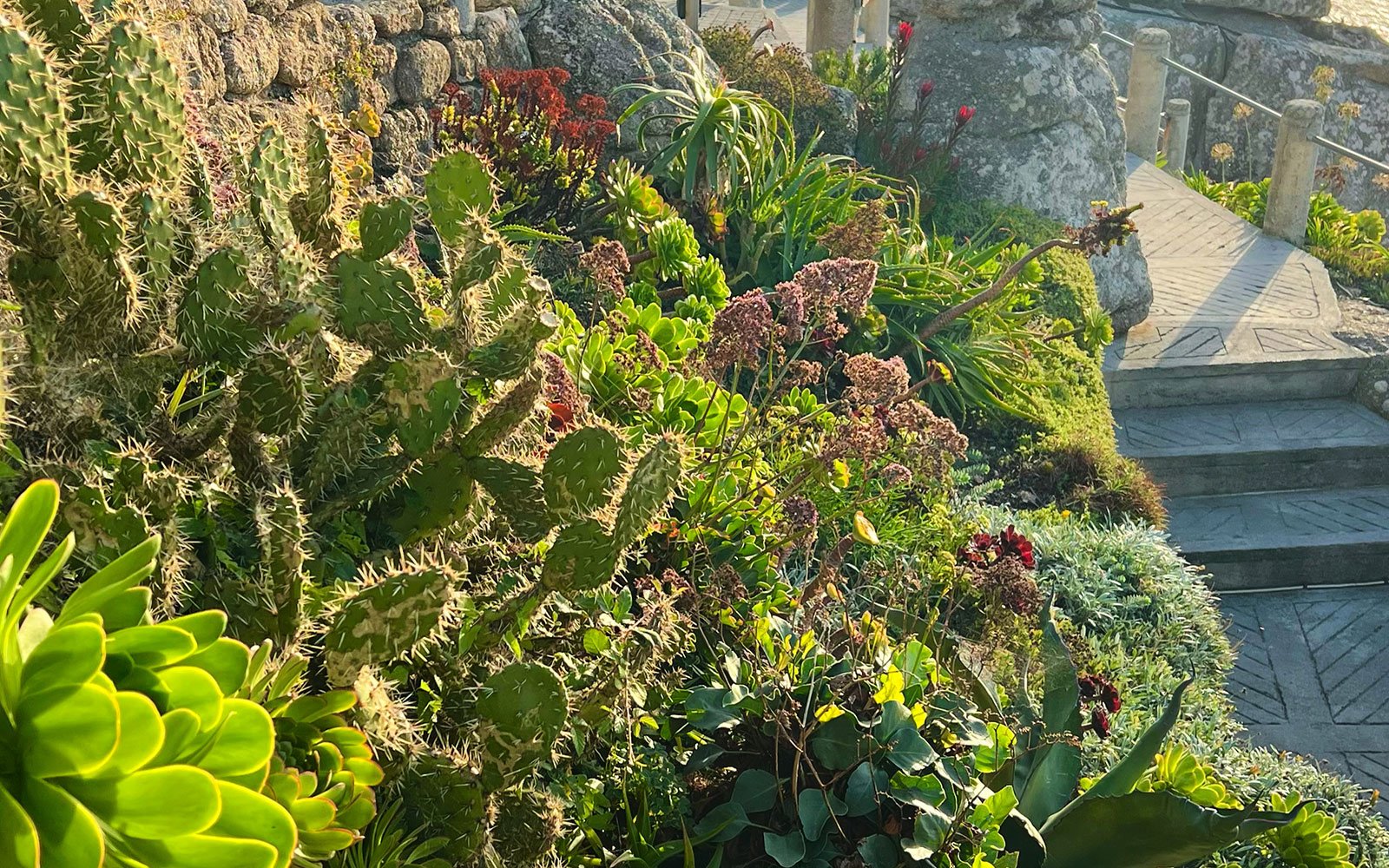
Succulents are an iconic feature on the cliffside of the Minack.
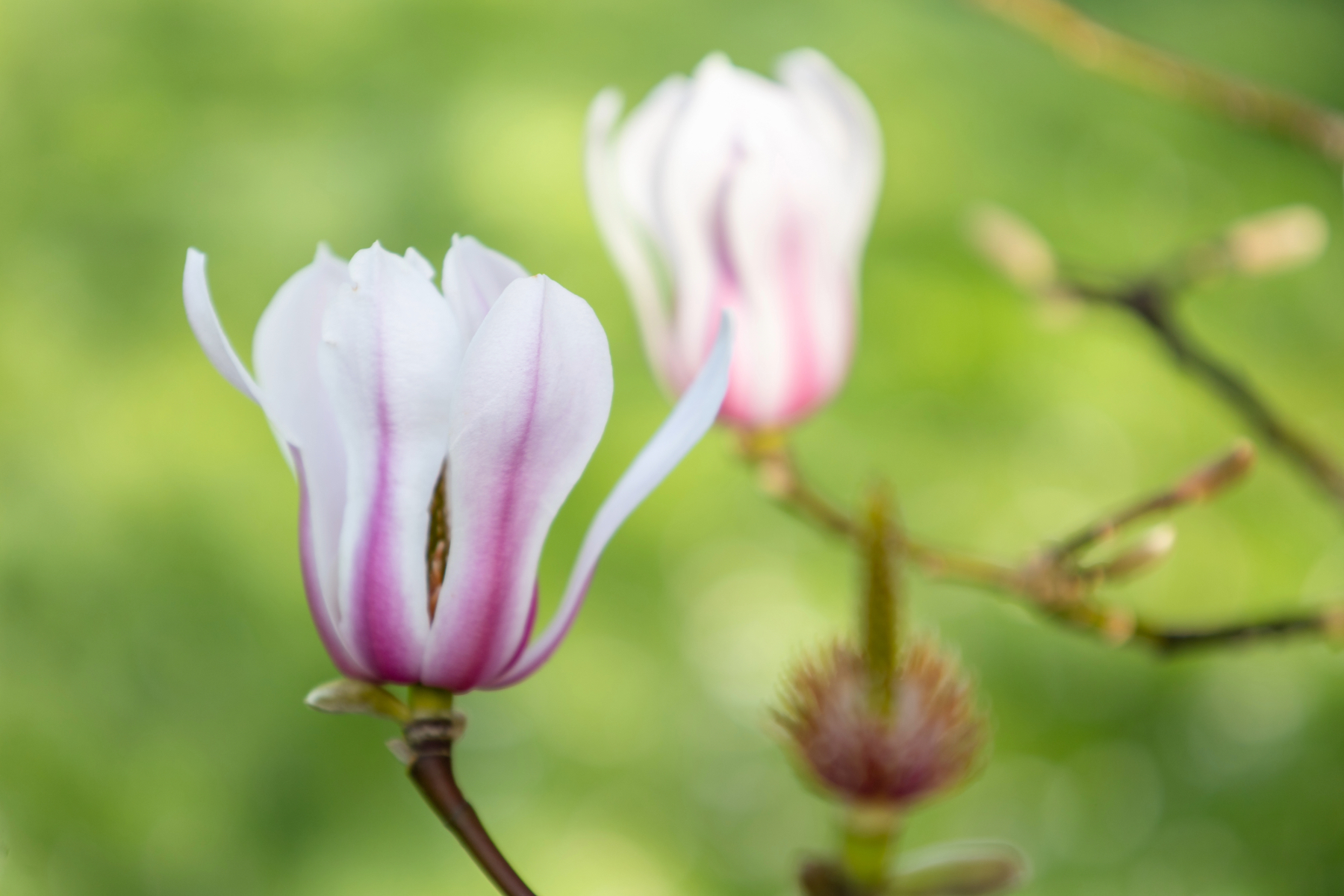
Longwood Gardens stretches beyond the detailed and structured gardens to both hillside and meadow areas too.
A Shared Season
Both gardens celebrate spring as a visual and sensory experience, interpreted according to landscape and design. At the Minack, spring is dynamic, vertical, and shaped by exposure, driven by wind, salt, and sudden growth. At Longwood spring is grand, layered and designed for spectacle and continuity.
From Cornwall’s clifftop terraces to Pennsylvania’s formal parterres, spring takes distinct forms while expressing the same essential qualities: growth, renewal, and connection with place. Each garden invites visitors to experience the season in its own way, through resilience, design, and the unfolding of bloom.
We hope you enjoyed this instalment of our Spring Worldwide series. Keep an eye on the Great Gardens of Cornwall blog and social channels, there are plenty more fascinating stories coming your way very soon.