
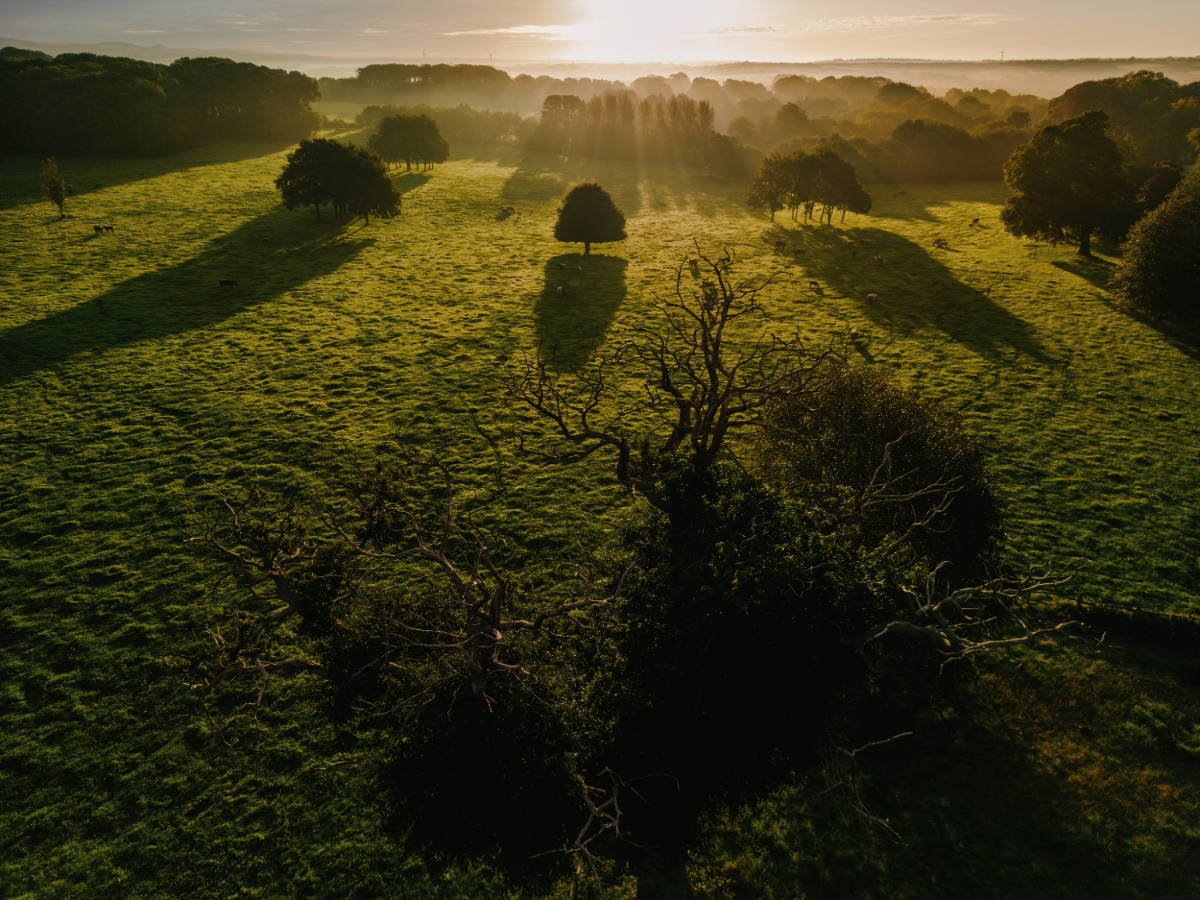
At the end of the balmy Cornish springtime, the softly sloping parkland of Trewithen Estate is a bright storybook green…
Beyond the brick framed windows I can see a broad oak, squat and gnarled amongst the rippling grass. The estate parkland stretches over an idyllic 200 acres, but it’s Trewithen‘s 30 acres of carefully curated woodland garden that Gary Long has nurtured for the past 22 years.
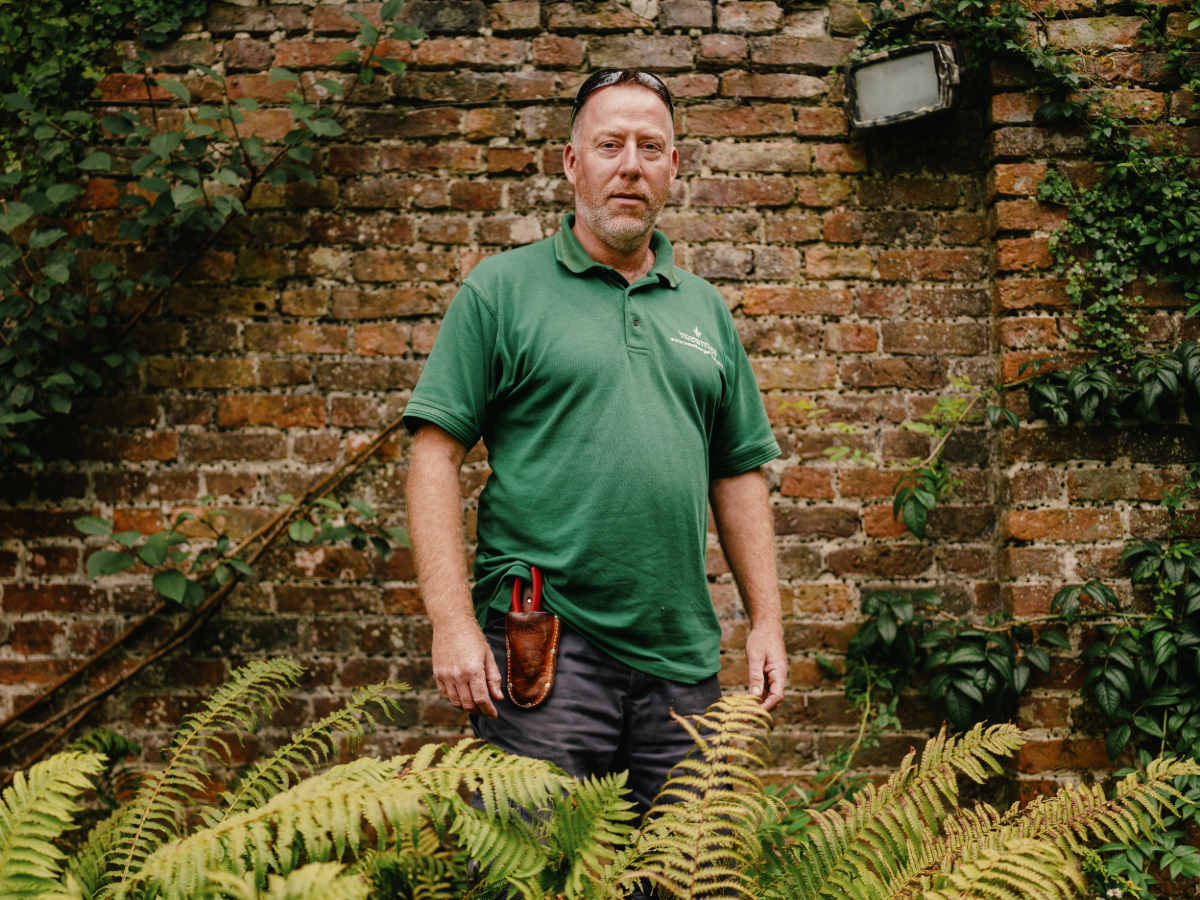
The first thing I noticed about Gary is that he talks about plants the way people talk about old friends, with an affection and familiarity that comes from spending many years in their company.
Gary has worked at Trewithen for more than two decades, but his relationship with gardening stretches back much further than that. Like many lifelong horticulturists, he struggles to identify the moment when interest became vocation because the distinction never really existed.
“The problem with schools when I was young was that they didn’t see gardening and horticulture as a career; they saw it as a non-exam entity,” he says. “If you can’t read and write, but you can drive a tractor, therefore you’re a farmer or a gardener, and that was so wrong.”
For much of the twentieth century, horticulture occupied an odd place in the public imagination. Gardening was celebrated as a pastime but rarely promoted as a profession; admired when practised by enthusiastic amateurs, but often overlooked as a skilled career requiring thorough technical knowledge.
“I was told I should go to college and university, but I rebelled,” he says, grinning. “I’ve been gardening ever since I was 15.”
Photography by Danny North
From Bud to Bloom
Most gardeners can identify a moment when plants ceased to be background scenery and became objects of fascination. For Gary, that moment arrived in the form of the plump, pink teardrop of a fuchsia bud.
“One of my first experiences with plants was the fuchsia flower. I remember it was a very, very hot summer – I’m not gonna say what year it was, but I was about six or seven,” he laughs. “I remember seeing the little flower bud, popping it, and seeing what’s in there.”
Gary doesn’t have a background of grand family gardening traditions, or sprawling inherited gardens, his interest in plants stemmed simply from being a child pulling apart a flower to see how it worked.
“I didn’t know what it was at the time at all, but looking at the floral parts inside, it was an inspirational moment, and my interest just started to spark from there.”
The best gardeners often possess a slightly forensic quality, that instinct for detail is central to Gary’s work, although the questions have become considerably more complex than the anatomy of a flower. Increasingly, they concern the future itself.
“Earlier this year, Storm Goretti destroyed areas of the garden,” he says.
The damage was significant, with one hundred and sixty-two trees lost across the estate. But amidst the battered and the windburnt, some trees revealed unexpected qualities in the face of increasingly unpredictable weather events.
“Not a single magnolia was damaged,” Gary notes thoughtfully.
For gardeners responsible for landscapes that evolve across decades, these observations can change the way entire gardens are planted and designed going forward. For gardeners like Gary, every storm becomes a field study. Every drought, flood or unusually mild winter provides clues about what may thrive in the years ahead.
“For instance, some plants such as beech trees are struggling with the wet winters and dry summers,” he says.
In this sense, modern gardening increasingly resembles long-range forecasting. Decisions made today may not reveal their wisdom, or folly, for decades.

Photography by Danny North
The Robot on the Lawn
On the ribbon of manicured lawn that rolls neatly away from the Georgian manor house, a robot mower trundles gently along like a metal horseshoe crab.
There is something faintly comic about seeing a robot mower gliding across the grounds of a historic Cornish estate. It looks less like a revolutionary piece of technology than a particularly determined household appliance that has wandered too far from home.
Gary speaks about technology with the enthusiasm of someone who understands exactly where its value lies. “In the years since I started working in horticulture, the industry has changed due to the fact that technology has come in,” he says.
Contrary to popular anxieties, the robot has not replaced the gardeners.
“Beforehand, we were spending 16 hours a week mowing lawns,” he explains. “Now we can be out actually doing the gardening.”
For Gary, tech works best when it removes repetition rather than expertise. The mower can maintain a lawn. It cannot decide what should be planted beneath a mature tree, identify a developing disease, or recognise when a garden’s balance has subtly shifted.
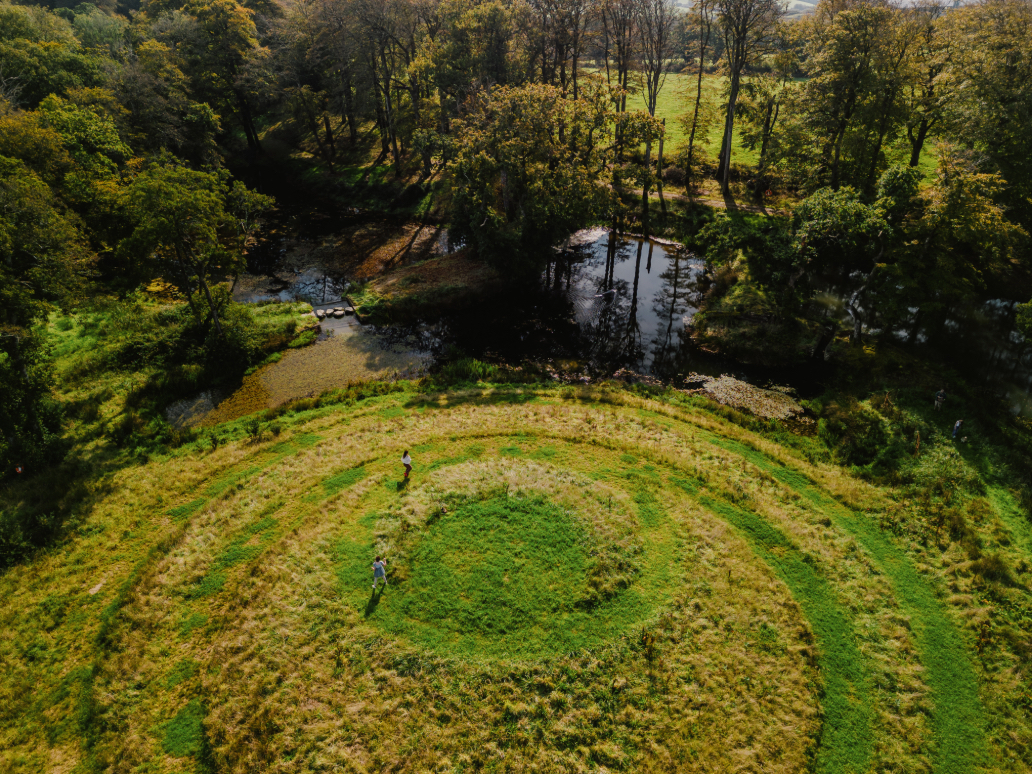
Trewithen’s digital plant records follow a similar philosophy. Using a database app called Hortis, the team maps individual plants across the estate, recording everything from photographs to provenance. The database for gardens at Trewithen is currently under development – keep an eye out on their website for the official launch.
“It is like stamp collecting,” grins Gary.
Like many other horticulturalists, beneath the practical work of maintaining a garden Gary has the collector’s impulse: to find a new species, learn where it came from, who discovered it, how it arrived here and what story it carries with it, and to keep striving to get the full set.
Photography by Danny North
Never Having a Monday Morning
Gardening is often described as therapeutic, though Gary rarely uses language that trite. Instead he talks about concentration.
“I really like pruning,” he says. “It’s great to just switch your mind off and get into it.”
This kind of horticultural detail work – pruning, edging lawns, removing dead growth, shaping shrubs – many of the tasks that occupy professional gardeners, once practiced and perfected can take on a meditative quality.
“The garden is my life,” Gary admits. “I’ve never ever had the Monday morning feeling of going to work.”
Being a professional gardener forces you to operate on a different timescale to most people. Trees grow slowly. Gardens evolve slowly. Knowledge accumulates slowly. For gardeners like Gary, patience isn’t a virtue to be cultivated, but a practical necessity.
“Some of the magnolias, for example, that I planted in maybe 2008 are only now starting to look like they’re going to come into flower,” he laughs.
For the past eight years, Gary has taken a photograph every day on his commute through the estate.
“So far I’ve not had a day where I can’t find something to take a photo of,” he says.
The habit feels like a perfect expression of the gardener’s mindset. Noticing, after all, is the fundamental skill from which every other horticultural skill grows. Before you can prune, propagate, hybridise or curate a collection, you must first learn how to look.
For young people interested in horticulture, Gary’s advice is simple: start small, and start paying attention. Visit gardens, he says. Wander through them. Notice what catches your eye. Then try growing something yourself.
“It could be anything – cress, sunflowers, anything simple that you know is going to work,” he says. “Once you grow that first seed, once that seed has developed into a plant, you’ve got it from there.”
The lesson, he suggests, is not really about the plant itself. It is about developing the habits that gardening rewards: curiosity, patience and observation. Professional horticulture may involve databases, plant collections and decades-long planting plans, but it begins in exactly the same place as it always has, with someone planting a seed and wanting to see what happens next.
“Patience, that’s a big thing,” nods Gary. “And it is passion, and it’s an eye for detail as well.”
Outside, the gardens continue their slow progress towards summer. Trees are peppered with pale, fresh growth. Spring flowers fade to give way to lush, thick summer leaf. New buds emerge. Somewhere, almost certainly, there is something worth photographing, it just needs someone to notice it.
Photography by Danny North